The Inevitable Shift
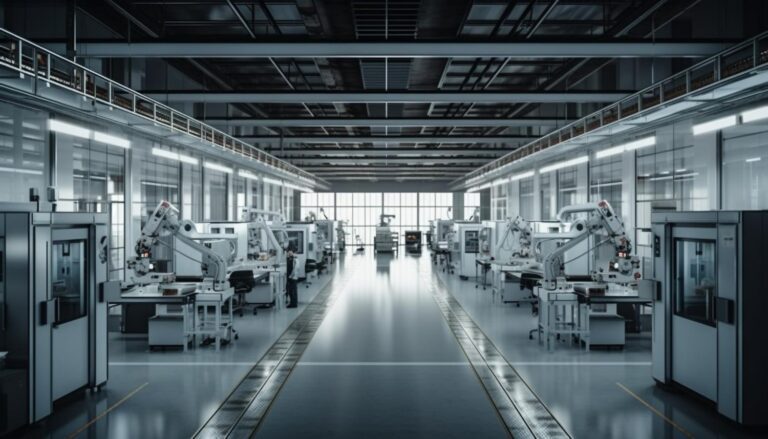
If you asked most people the most defining sound of a factory ten years ago, the clanking noises of machinery would be a common response. Fast forward to today, and the response might surprise you.
Modern factories have undergone significant transformations, and their familiar clanking noises now sync with the pervasive, yet pulsating, hum of data and artificial intelligence.
Don’t want to miss the best from TechLatest ? Set us as a preferred source in Google Search and make sure you never miss our latest.
This is more than an incremental upgrade; it’s a profound transformation, one that I, Lesia Yanytska, Chief Product Manager at Luxoft, am privileged to lead.
My work involves masterminding precisely this kind of transformation, deploying cutting-edge Manufacturing Execution Systems (MES) infused with AI across different continents.
My philosophy is simple, yet clear on my vision for this future: “The narrative that AI will replace human workers misses the point. I believe that advanced AI will augment the capability of the human, who remains at the heart of this innovation.”
Yet, my position at the forefront of this revolution masks a journey, often unseen, and one riddled with complex challenges unique to women climbing the ranks of industrial tech.
I observed that as you rise higher in industrial tech leadership, the proportion of female leaders shrinks dramatically. This is a path I have navigated firsthand, confronting and overcoming the invisible barriers as a trailblazer in Industry 5.0.

Lesia Yanytska
My Journey to Global Product Leadership
My career in the IT industry began as a Business Analyst. There, I immersed myself in the intricacies of diverse roles, from automating warehouse operations to developing advanced solutions to manage workforces.
Every project required me to identify client hurdles while converting these problems into technical requirements and acting as a liaison between technical personnel and business leaders.
My analytical skills became refined during these years while I developed a deep appreciation for the practical aspects of industrial operations.
I mastered engineering terminology and aligned with executive goals while understanding end users’ everyday challenges. This hands-on experience cast light upon my career journey.
I hungered to do more than merely analyze problems; I wanted to actively own and shape solutions, create strategic roadmaps, and steer innovative products from conception to deployment.
My ambition drove me to secure important product management certifications, such as Professional Scrum Product Owner™ and Scaled Agile Framework Product Owner/Product Manager, before completing the Product Management program at MIT.
The move from Business Analyst to a global MES leader appeared to be an organic growth process rather than an intentional jump because I was naturally driven to surpass my own expectations.
I used my technical expertise together with my human-focused skills to create innovative solutions that brought about true industrial transformations.
The Vision Behind Global MES Deployment
The main challenge in conventional factory operations became strikingly clear to me as an established product manager – processes were siloed, essential factory data was fragmented, and there was no unifying intelligent system to put it together.
Through collaborations with engineers, C-suite executives, and frontline workers, I quickly understood the negative impact of these siloed processes. I observed that despite immense data being generated, its actionable potential remained locked behind complex SQL queries deciphered only by a handful of technical specialists.
What many industry leaders overlooked was the significant impact of this bottleneck in stifling real-time decision-making and continuous improvement, the requisite abilities needed in a rapidly evolving industry.
This key insight fueled my ambition to lead the development of an MES suite from the ground up. I believed that for smart factories to truly thrive, data had to be democratized and made instantly available to everyone who needed it, from the frontline operators to the C-suite executives.
My leadership vision materialized: “To redefine the MES as the true brains of the modern smart factory, a system that not only collected basic data from the factory floor but also orchestrated it into actionable intelligence for all.”
This meant conceiving a platform that was intuitively integrated with the industrial Internet of Things (IIoT) devices, capable of processing large data sets in real time.
More importantly, it required envisioning natural language AI copilots well before they became mainstream and embedding machine learning for the identification of real-time efficiencies and communicating these insights to non-technical workers on the factory floor.
From the outset, my leadership vision was to fundamentally change how factory workers interacted with their data by providing previously siloed foresight and insight. It was about building an AI system that augmented human abilities and ushered in a new era of manufacturing.
The Transformative Impact of a Global MES
Identifying the need for a unified, intelligent system was only the start. The true leadership test involved masterminding the deployment of the MES suite in diverse manufacturing landscapes.
This deployment involved navigating a complex web of complexities, from adapting to diverse regulatory environments to fostering changes in user behavior. I understood that true success pivoted not only on the technology but also on the unabated effort to ensure it was practically adopted by the very individuals it was meant to serve.
I realized that cross-cultural and inclusive leadership principles were vital to the success of deploying the MES suite across international borders. Visible results of our MES emerged in different smart factories across Europe, Mexico, India, and the U.S.
Machine learning abilities tracked the flow of materials with high precision. The local factory teams report that real-time identification of inefficiencies leads to significant cost reductions on the shop floor.
The introduction of intuitive visual dashboards and automated report builders drastically decreased the workload of manual reports, which enabled teams to shift their attention towards strategic activities.
Our MES evolution now includes natural language AI copilots, which enable non-technical staff to perform complex data queries more intuitively while decreasing decision-making time. The initial data from usage demonstrated possible reductions in processing time by as much as half.
Beyond the observable metrics, our MES suite was enabling a silent, yet significant, shift in factory culture. Time spent analyzing and interpreting static reports was dedicated to strategic processes and continuous improvements.
My journey, characterized by pioneering such global transformation, has reinforced my belief that influential industrial tech leadership requires a blend of a strategic mind and empathy to empower every individual.
This is a path I believe for all inspiring leaders, especially women, who seek to make a meaningful impact and leave a lasting legacy.
Image by pch.vector on Freepik
My Vision and Architecture for the Future
While the silent revolution in the modern smart factory, driven by advanced intelligent MES and AI, is far from complete, its course is clear.
We have laid the foundation, demonstrating how combining a deep understanding of human needs with strategic foresight transforms fragmented data into actionable intelligence, lowering costs and delivering efficiency gains for manufacturing companies.
Navigating this path as a woman leading industrial tech in a predominantly male-dominated field has underscored the critical need for visibility and mentorship. More women leaders driving change in industrial tech need to be made visible and their stories heard.
As I look forward to the next wave of innovation, my guiding philosophy remains rooted in this symbiotic relationship between humans and machines: “The factory of the future isn’t about eliminating the human touch; it’s about making every human touch more intelligent, more intuitive, and more impactful.”
I invite all leaders – particularly women – to enter into this transformative space and leave an indelible mark. I envision a future where intelligent systems seamlessly handle repetitive and complicated tasks, thereby unlocking human potential for critical thinking, creativity, and mastering the complex processes that drive innovation.
This story was originally published on November 18, 2024.
Enjoyed this article?
If TechLatest has helped you, consider supporting us with a one-time tip on Ko-fi. Every contribution keeps our work free and independent.
