In a time when even our kids’ toys are connected to the internet, children’s games have transformed from a source of amusement to surreptitious data-collection platforms with great power, acting beyond parental knowledge – or consent.
Often overlooked by the bright colors and fun sounds in play, most children’s app software collects private information, and the problem is far worse than many think it is.
Don’t want to miss the best from TechLatest ? Set us as a preferred source in Google Search and make sure you never miss our latest.
Read : How to Stop Apps from Collecting Your Personal Data?
The Hidden Cost of “Free” Games
The majority of children’s games are free to download from the app store, but if a game is free, then it must still be making money somehow – after all, almost nothing in life is free.
How it does this is through the most frequent means: data mining. The apps track a child’s whereabouts, activity in the game, screen time, and interests, as well as, in some cases, sounds or keystrokes.
While adults are, to some extent, conscious of this sort of tracking, children are far more vulnerable. They do not have any conception of what it is like for their privacy to be breached.
Behind the scenes, the collected data is sold to advertisers and data brokers. The information is then used to generate digital profiles that can monitor a child deep into adolescence, years before they have any hope of controlling or even being aware of their digital existence.
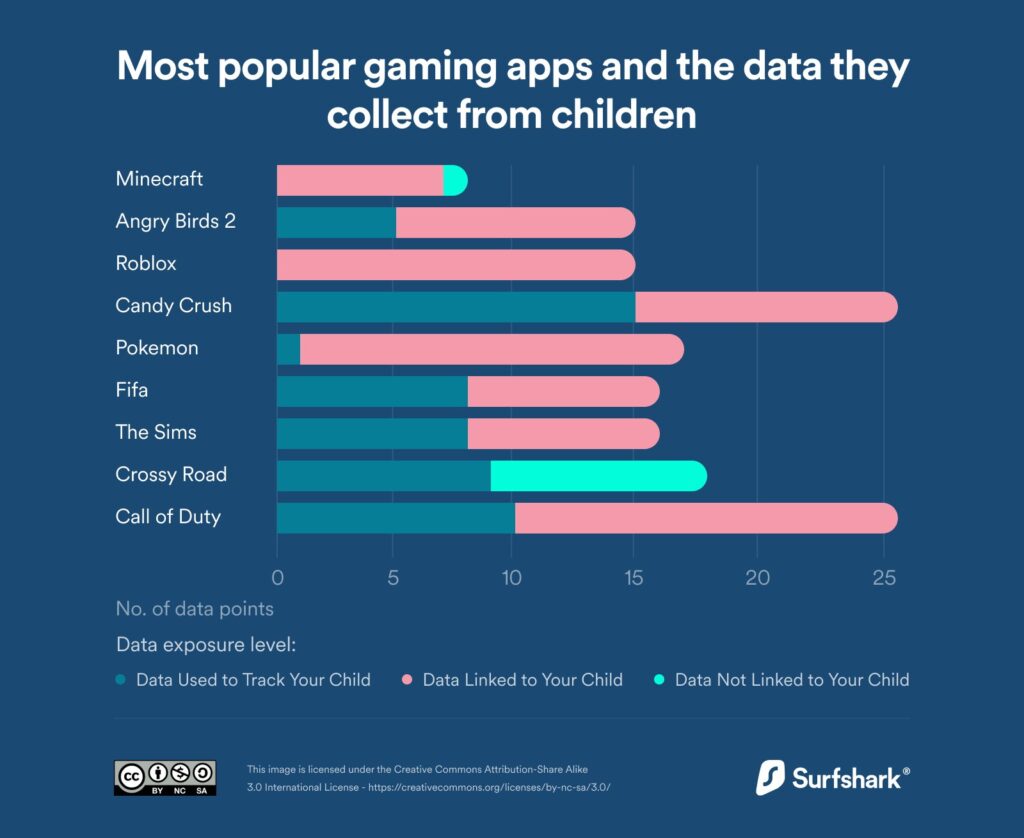
Data collected by children’s gaming apps
Consent Is Often a Technicality
Legally, an app must get parental permission prior to collecting information from kids under the age of 13. This is demanded by the Children’s Online Privacy Protection Act (COPPA) in the US.
Enforcement of this legislation varies. Most developers sidestep the rules by making their app not have children as the target audience or by inserting consent language far down in long-term-of-service documents.
Some apps go one step further in (dis)obeying rules by flagrantly ignoring them. Research has revealed that the vast majority of so-called “kid-friendly” apps contain hidden code that passes data to third-party ad networks, regardless of the user’s permission.
Parents who try to protect their children using device settings or privacy controls see their efforts foiled by deceptive design choices.
Behavioral Targeting Begins Early
For example, a game might notice a child responding better to bright colors and lively music in the late afternoon.
This insight feeds into a system that tweaks the game to keep the child playing longer. It’s not random, it’s data-driven behavioral engineering, starting at a very young age.
What Can Parents Do?
While legislation remains in catch-up mode, there are things parents can do to meaningfully protect children’s privacy:
- Review app permissions with care.
- Avoid games with excessive ads or in-app spending.
- Choose apps developed by respected companies.
- Use privacy protections like a VPN extension for Firefox to cloak IP addresses and encrypt data.
- Engage kids in open talks about digital privacy.
- Set explicit screen time boundaries to foster healthy tech habits.
Though no single move will provide absolute protection, using these tactics in combination can enormously minimize the risks.
Read : 7+ Tips to Browse the Internet Safely
Manipulation Masquerading as Play
Numerous games employ design ploys that lead children to continue playing, including:
- Loot boxes, wheelspins or random rewards
- Time-limited challenges or bonuses
- Regular push notifications and reminders
Combine these tricks with detailed behavioral data, and the result is a platform that can manipulate attention with scientific precision. In many cases, these games function more like research labs than entertainment.
Weak Regulation, Strong Profits
This problem is not limited to small or niche programmers. Many of the biggest players in the industry have themselves been fined for violating children’s privacy law.
Unfortunately, the money spent on fines is typically too small to actually matter. The profits gained from taking advantage of milking this data far outweigh the cost of occasional legal consequences.
At the national level, there is still no strong, modern federal privacy law explicitly designed to protect children of the digital age.
Final Thoughts
The games kids enjoy may be accumulating more than high scores. They are creating long-term digital records that can influence subsequent experiences and choices in ways unseen.
Corporations are making a lot of money while our kids play games. It is time to see behind the enjoyment and acknowledge what is truly at risk. Data mining in children’s games is more than an issue of privacy; it’s also an ethical concern that requires serious consideration.
Enjoyed this article?
If TechLatest has helped you, consider supporting us with a one-time tip on Ko-fi. Every contribution keeps our work free and independent.
