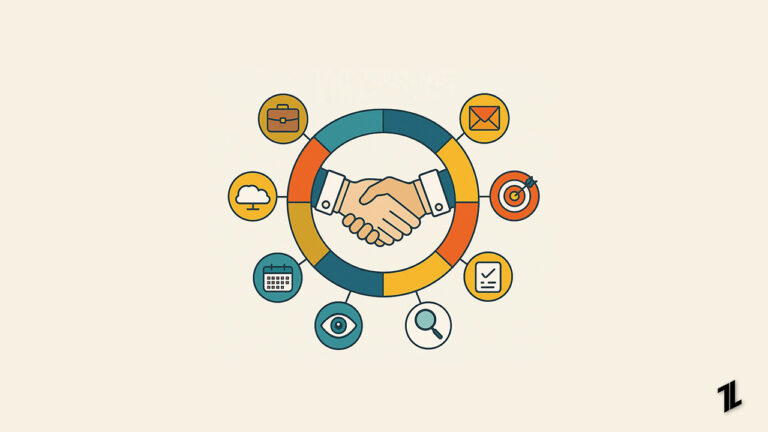
In an increasingly complex and regulated corporate world, companies that can skillfully navigate the delicate balance between innovation, governance, and compliance gain a significant competitive edge. Risk Governance and Compliance have evolved from mere bureaucratic best practices to become strategic pillars.
In large financial institutions, such as S1 banks (the largest and most important in Brazil, according to the Central Bank of Brazil’s classification, based on total assets, off-balance sheet exposures, and international operations), risk and compliance management initiatives now serve as key drivers of transformation, organizational efficiency, and resilience.
Don’t want to miss the best from TechLatest ? Set us as a preferred source in Google Search and make sure you never miss our latest.
However, behind robust programs and advanced tools, there is often an overlooked figure, yet absolutely indispensable: the managers responsible for integration.
Behind the scenes of these operations, professionals connect departments, align interests, orchestrate technologies, and shape corporate cultures. These leaders possess a systemic vision, strong negotiation skills, and technical expertise.
One name that stands out in this field is Adriano Assem dos Santos, an expert whose career proves that risk management can, indeed, become a competitive advantage when driven by strategic purpose and operational excellence.
Content Table
The Rise of Risk Management as a Competitive Advantage
Before discussing the protagonist, it is important to understand the growing relevance of risk management.
Historically confined to areas like legal compliance and financial auditing, governance and risk now function as value drivers, anticipating trends, mitigating crises, and spurring innovation.
Risk management, for example, is no longer just about preventing losses—it anticipates scenarios and guides strategic decisions. Risk governance has evolved from being a control tool to becoming an organizational compass.
Compliance, too, has evolved, now acting as a bridge between ethics and reputation, increasingly monitored by consumers and investors.
Risk Management Platform: Strategic Integration in the Financial Market
Amid this transformation, one of Brazil’s largest financial institutions embarked on one of its boldest risk management initiatives: the creation of an integrated platform for risk management, compliance, and auditing.
The proposal was ambitious—unifying three historically distinct and methodologically diverse areas into a single tool.
Centralizing risk reporting for the executive board, standardizing methodologies, and creating communication flows between defense lines seemed, to many, an idealistic goal. For Adriano Assem, however, it was a feasible symphony—provided there was leadership.
The Maestro Behind the Integration
Adriano didn’t arrive at this project by chance. With over a decade of experience at this major bank, he has worked in strategic consulting, digital transformation, client management, and business strategy.
In his current role, he led a large budget and commanded a team of more than 40 professionals in one of the organization’s most strategic projects.
“It’s not just about implementing systems or methodologies. It’s about creating alignment of purpose between areas that have historically worked in isolation.
This requires more than just technical knowledge—it requires active listening, political negotiation, and a long-term vision,” says Adriano.
For colleagues and leaders who have worked with him, Adriano’s experience in large strategic projects—such as creating departments, acquiring companies, operational synergies, and developing products—was key to the success of this massive risk management venture.
His role reinforces an essential principle of organizational transformation: real change does not only happen in the codebase of the tools but in the culture of those who operate them.
Adriano became the bridge between strategy and operation, between top leadership and technical teams, and between the fragmented present and the integrated future.
Experience That Shapes Results
With a career on the rise, Adriano has accomplished something rare: in just 10 years, he went from an intern to an executive leadership position—an achievement nearly unheard of in such a traditional, closed-career institution like the one he worked at.
Beyond his solid practical experience, his education is also impressive: an MBA in Project Management from FGV, international certifications in SCRUM and Management 3.0, and participation in global events such as the WTO Forum in Geneva—a profile of a global professional, attuned to trends and ready to drive large-scale changes.
Translating Risk Management into Practice
Perhaps Adriano’s greatest merit is his ability to make risk management accessible and applicable to the everyday workings of complex corporations.
“The real value lies in translating risks into actionable decisions for every area of the company,” he explains.
This perspective represents an important shift: moving from a mindset of control for control’s sake to adopting risk management as an intelligence tool that increases efficiency, reduces losses, and adjusts the cost of compliance to align with the organization’s strategy, ultimately bringing greater stability and profitability to the business.
Building the Future with Intelligence and Integration
Today, as companies grapple with the challenges of artificial intelligence, ESG, open finance, and data privacy, professionals like Adriano are becoming indispensable—not only for their technical expertise but for their ability to build bridges across the multiple dimensions that define contemporary organizational success.
When we look at grand risk management projects, it’s easy to focus on the final result—sleek dashboards, smart reports, and solid indicators. But behind all of this, there are professionals of excellence driving the processes, actions, and purposes. Adriano is certainly one of those professionals who makes a difference in corporate risk management.
Enjoyed this article?
If TechLatest has helped you, consider supporting us with a one-time tip on Ko-fi. Every contribution keeps our work free and independent.
