Highlights
- Ghost Spectre Windows dramatically boosts gaming FPS and frees up RAM, making your PC feel incredibly fast.
- Get all FAQs answered on Ghost Spectre Windows’ stability, security risks, and how to install it safely.
- Discover if Ghost Spectre Windows is the ultimate debloated OS for your setup, with expert insights on its versions and comparisons.
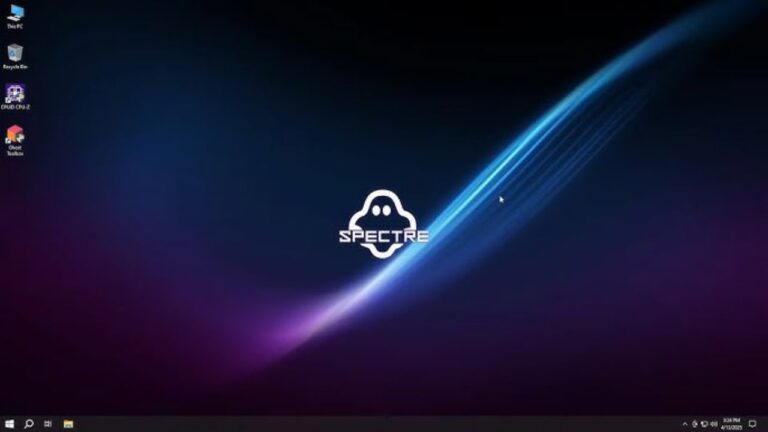
Have you ever had the impression that your Windows computer is sluggish due to undetectable processes, sly telemetry, and software you never requested?
You’re not by yourself. When it comes to gaming or revitalizing an outdated computer, many of us long for a Windows experience that simply moves out of the way and lets our hardware shine.
Don’t want to miss the best from TechLatest ? Set us as a preferred source in Google Search and make sure you never miss our latest.
Ghost Spectre Windows is now available. Most likely, you’ve come across YouTube videos praising its amazing performance, heard rumors, or seen forum discussions about it.
However, what is it? Is it secure? Is it the solution to all of your PC problems? We break through the clutter at TechLatest.
Content Table
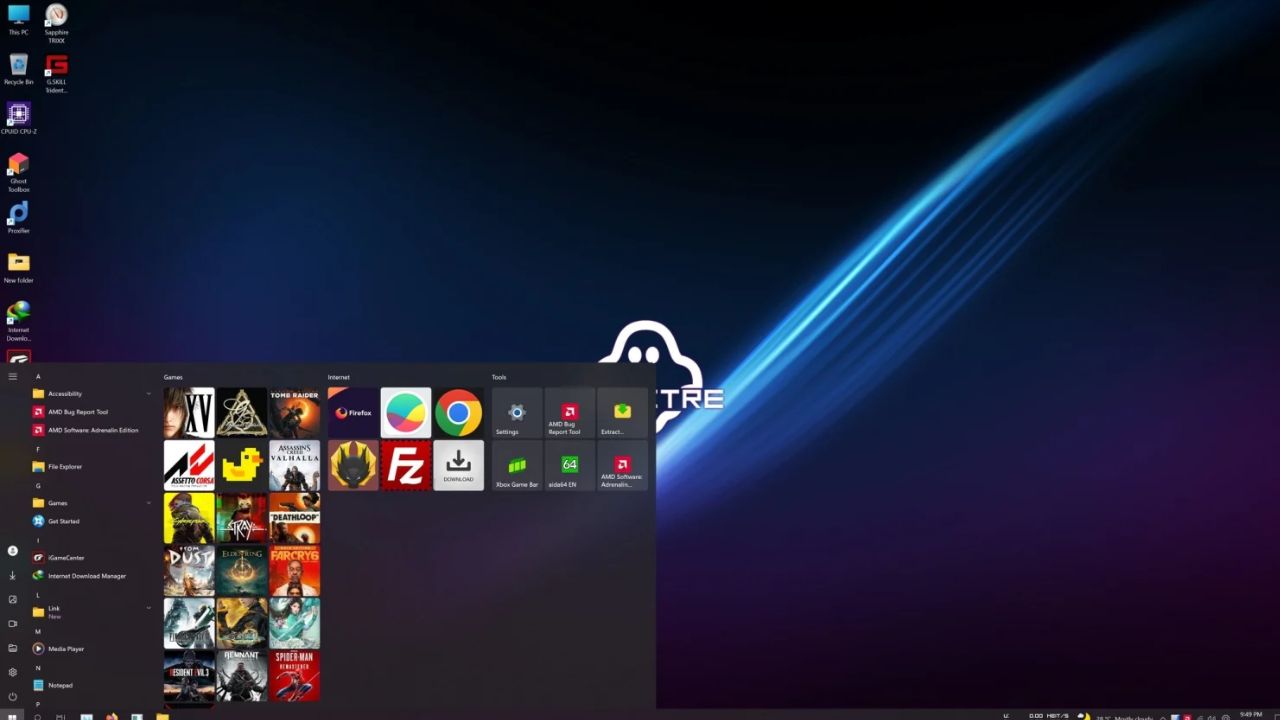
Image Credits: TechLatest
What Exactly is Ghost Spectre Windows?
Imagine Windows reduced to its most basic components, much like a successful athlete following a strict diet and training schedule.
That’s Ghost Spectre, to put it briefly. A community of enthusiasts has meticulously debloated and optimized this version of Microsoft Windows, which is available for both Windows 10 and 11.
The basic idea is straightforward: eliminate all background processes, telemetry, pre-installed apps (such as OneDrive, Cortana, and many UWP apps), and unnecessary services that usually use up your system’s precious RAM, CPU cycles, and storage.
The outcome? an operating system that is significantly lighter, quicker, and more responsive. It frequently includes a “Ghost Toolbox”, a useful tool for additional system management and tweaking.
Gaming & Performance: The Million-Dollar Questions
This is typically the reason why people even begin researching Ghost Spectre. Let’s get right to the point.
1. Does Ghost Spectre Windows actually improve gaming performance significantly?
In a single word? Of course. Gamers frequently report a discernible, occasionally dramatic improvement in gaming performance.
Consider it this way: data collection, indexing, and unused services are all going on in the background while your stock Windows is operating.
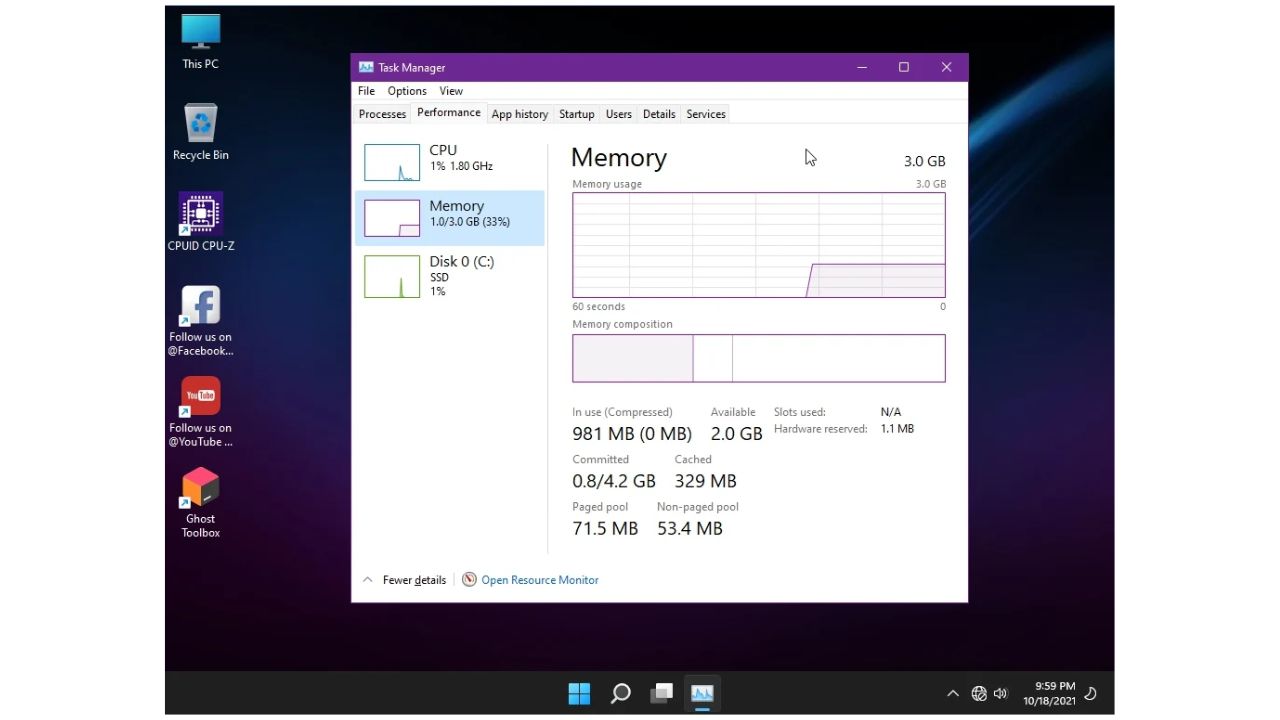
Image Credits: TechLatest
Everyone is kicked out by Ghost Spectre, so your system resources are solely used for your game. This results in a smoother overall gaming experience and higher and more consistent frame rates (FPS), particularly in CPU-bound scenarios. Because of the advantage it offers, a lot of competitive gamers swear by it.
2. How much RAM and CPU does Ghost Spectre use at idle?
Ghost Spectre really excels in this situation. Ghost Spectre users often report idle RAM usage falling below 1GB, whereas a typical Windows 11 installation might happily eat up 2.5GB or more of RAM at idle.
It has even been reported to hover between 600 and 700 MB. Similar to this, there is a significant decrease in background CPU activity, freeing up your processor for taxing activities like content creation or gaming. For systems with older CPUs or little memory, this makes it a blessing.
3. Is Ghost Spectre Windows good for low-end PCs?
Definitely. Ghost Spectre can help you get the most performance out of an inexpensive desktop computer or an outdated laptop or a budget desktop, Ghost Spectre can be a game-changer.
Its minimalist footprint means even modest hardware can feel surprisingly snappy and responsive, making tasks that were once sluggish (like opening applications or Browse the web) feel much smoother. It’s like giving an old car a high-performance engine tune-up.
4. What are the FPS gains in popular games (e.g., CS2, Valorant) with Ghost Spectre?
Although precise figures largely rely on your particular hardware, it’s generally agreed that you’ll probably notice a noticeable increase in frame rate.
The benefits stem from lower latency and less system overhead for CPU-sensitive, fiercely competitive games like Valorant or CS2.
Significant percentage increases have been reported by users, making framerates that were previously unplayable much more enjoyable.
In Minecraft, for example, some users reported a jump from 60 to 70 frames per second on stock Windows to 100 frames per second on Ghost Spectre, or even from 500 to 800 frames per second to 1000–2000 frames per second with performance clients like Lunar Client. What a difference!
5. Does Ghost Spectre reduce input lag in games?
A reduction in system overhead is unquestionably helpful, even though “input lag” is a complicated beast influenced by numerous factors (monitor refresh rate, mouse polling rate, and network latency).
Ghost Spectre can help create a more responsive feel by reducing system latency and background processes.
This gives you a slight but frequently significant edge in fast-paced games by enabling you to react more quickly.
6. Is Ghost Spectre Windows better than regular Windows for competitive gaming?
Eliminating anything that might cause micro-stutters, unexpected background activity, or unnecessary latency. If winning is your primary goal and you’re willing to manage the trade-offs, it offers a distinct advantage.
7. Does Ghost Spectre Superlite really make Windows 11 faster?
Definitely. The “Superlite” version is designed to perform at its best. Compared to the standard Ghost Spectre builds, Windows 11 feels incredibly fast and lightweight it is most aggressive debloating and optimization. If you’re ready for a really stripped-down experience and raw speed is your top priority, Superlite delivers.
8. Are there common stability issues with Ghost Spectre Windows?
While generally stable for its intended use, it’s crucial to remember that Ghost Spectre is a modified OS. It’s not officially supported by Microsoft, so unexpected quirks can arise.
Most users find it remarkably stable for day-to-day gaming and Browse, but issues can sometimes surface, especially after a problematic Windows Update or if a specific piece of software unexpectedly relies on a component that has been removed.
9. Does Ghost Spectre cause crashes or blue screens?
Frequent blue screens (BSODs) are not a common occurrence if you download from a legitimate source and install correctly.
However, due to its highly modified nature, there’s always a slightly elevated risk compared to a pristine stock Windows installation.
If you run into issues, they’re often related to specific problematic Windows updates or conflicts with particular hardware drivers that might not be designed for such a stripped-down environment.
10. What are the most frequent bugs in Ghost Spectre Windows and how to fix them?
Here are some commonly reported minor hiccups and their workarounds:
Microsoft Store/UWP App Issues: Many Ghost Spectre versions aggressively remove these. If you need the Store or UWP apps (like those for Xbox Game Pass), you might need to re-enable them using the included Ghost Toolbox utility. Some versions may not allow this at all.
Driver Glitches: While most drivers work, if Windows Update is heavily disabled, automatic driver installation won’t happen. You’ll need to manually download the latest drivers directly from your hardware manufacturer’s website (NVIDIA, AMD, Intel, motherboard manufacturers) and install them yourself.
Missing Media Codecs: Some highly debloated versions might remove certain obscure media codecs. If you can’t play specific audio or video files (like OGG files, as reported by some), installing a third-party media player (like VLC) or a universal codec pack usually solves it.
Problematic Windows Updates: Ah, the classic! Updates can reintroduce bloat or even break optimizations. The solution is often to pause updates indefinitely via the Ghost Toolbox or only install security-critical patches. Be prepared to run the Ghost Toolbox optimization script again after any update.
11. Is Ghost Spectre stable enough for daily use?
For many users, particularly gamers and those with older hardware, absolutely. If your main activities involve gaming, web Browse, and common applications, Ghost Spectre can serve as a perfectly stable and performant daily driver.
However, if your work requires deep integration with Microsoft services, specific enterprise software, or you simply prefer the comfort of official support and seamless updates, you might find it a bit too minimalist.
12. Do Windows updates break Ghost Spectre?
This is a tricky one. Windows updates can definitely interfere with Ghost Spectre’s optimizations. Major feature updates are notorious for reintroducing bloatware, resetting tweaks, or even causing instability. It’s why many users choose to disable or heavily manage updates on a Ghost Spectre installation.
13. How to prevent bloatware from returning after Ghost Spectre updates?
Your best defense here is the Ghost Toolbox . After any Windows Update that manages to slip through, run the Toolbox and re-apply the optimizations.
Many users also opt to pause Windows Updates for extended periods (some versions offer an option to pause until 2077!) or simply perform a clean reinstall of the latest Ghost Spectre ISO when major Windows versions drop.
14. What are the long-term experiences of Ghost Spectre users?
It’s a mixed bag, but generally positive for its target audience. Many users report continued satisfaction with its performance and efficiency over months or even years, especially for gaming.
However, some find that over a very long period, or after a series of cumulative updates, the system might lose a tiny bit of its initial zing.
Regular use of the Ghost Toolbox and, for major OS upgrades, a fresh reinstall of the latest Ghost Spectre version are commonly cited strategies for maintaining optimal long-term performance.
Compatibility: What Works and What Might Not
When you strip down an OS, compatibility can be a concern.
15. What software doesn’t work with Ghost Spectre Windows?
Software that relies heavily on specific, often background, Windows services or deep integration with the Microsoft ecosystem (especially Universal Windows Platform or UWP apps) might have issues.
This can include some niche enterprise software, certain VPN clients, or even aggressive anti-cheat systems that don’t like modified OS environments.
However, the vast majority of mainstream applications and games, like Chrome, Firefox, Steam, Adobe Creative Suite, etc., run perfectly fine.
16. Are there driver compatibility issues with Ghost Spectre?
Generally, no. Core hardware drivers for your graphics card, chipset, storage (M.2 SSDs), and peripherals are usually compatible.
The main difference is that with Windows Update often disabled, you’ll need to download and install these drivers manually from your hardware manufacturer’s official websites. This is often recommended anyway for optimal performance.
17. Can I install Microsoft Store apps on Ghost Spectre?
By default, many Ghost Spectre versions have the Microsoft Store removed. If you absolutely need it, some versions, particularly the “Compact” ones, offer an option within the Ghost Toolbox to re-enable the Store.
However, if a version has aggressively stripped out the underlying UWP framework, it might not be possible to restore full Store functionality.
18. Does Ghost Spectre work with Xbox Game Pass?
This is a frequently asked question and a known point of difficulty. Xbox Game Pass games and the Xbox app often have tight dependencies on the Microsoft Store and other core Windows services that Ghost Spectre might remove.
While some users might get it to work with various tweaks via the Ghost Toolbox, it’s not guaranteed, especially on the “Superlite” versions. If Game Pass is a must-have for you, proceed with caution or consider a less aggressive debloated OS.
19. Will my specific hardware (e.g., graphics card, M.2 SSD) have issues with Ghost Spectre?
In almost all cases, no. Ghost Spectre maintains the fundamental Windows kernel support for modern hardware.
Your graphics card will work, your M.2 SSD will be blazing fast, and your CPU will function as expected. Any “issues” are almost always related to the absence of automated driver installation (which you resolve by installing drivers manually) or conflicts with extremely niche software.
Security & Privacy: A Critical Examination
This is perhaps the most important section. Using a modified OS has inherent security implications.
20. Is Ghost Spectre Windows safe to use?
This is the million-dollar question, and the answer comes with a big caveat: ONLY IF YOU DOWNLOAD FROM THE OFFICIAL SOURCE. (GS YouTube Channel or our provided links)
Ghost Spectre is a community-made modification. There’s no official Microsoft endorsement or quality control.
The biggest risk isn’t necessarily the official Ghost Spectre build itself (which the developers generally intend to be clean), but the source from which you download it.
Unofficial mirrors, torrents, or random websites could distribute ISOs bundled with malware, cryptocurrency miners, or other nasty surprises.
Always, and we mean ALWAYS, download Ghost Spectre ISOs exclusively from the links provided on their official YouTube channel or platforms like us where we put the same links from GS YouTube channel. This minimizes the risk of a compromised file.
- Ghost Spectre Windows 10 AIO
- Ghost Spectre Windows 11 Pro
- Ghost Spectre Windows 11 Home
21. What are the security risks of using a modified Windows OS like Ghost Spectre?
Even when downloaded safely, there are considerations:
Disabled Security Features: Many Ghost Spectre versions, particularly the “Superlite” ones, disable or even remove Windows Defender, SmartScreen, and other built-in security components to boost performance. This means your system is less protected out-of-the-box. You must install a reputable third-party antivirus/anti-malware solution immediately after installation.
Reduced Updates: While great for performance, disabling Windows Updates means you might miss critical security patches from Microsoft. This could leave your system vulnerable to newly discovered exploits.
Trust: You are ultimately trusting the developers of Ghost Spectre that their modifications haven’t inadvertently (or intentionally) introduced vulnerabilities.
22. Does Ghost Spectre completely remove telemetry?
Yes, a core objective of Ghost Spectre Windows regarding privacy is to significantly reduce or completely eliminate Windows telemetry and data collection services. This is a major draw for privacy-conscious users.
23. How to ensure privacy on Ghost Spectre if Windows Defender is disabled?
A: If you choose a Ghost Spectre version without Windows Defender, immediate action is required:
- Install a reputable third-party antivirus/anti-malware suite: Think Bitdefender, ESET, Kaspersky, Avast, or Malwarebytes. This is non-negotiable.
- Practice safe Browse: Be vigilant about suspicious links, email attachments, and untrusted websites.
- Use a good firewall: While Windows Firewall might still be present, consider a third-party firewall for more granulr control.
- Keep your third-party security software updated.
24. Is Ghost Spectre a virus or malware?
The official Ghost Spectre project itself is not designed to be malware. It’s a legitimate effort by community developers to create an optimized Windows experience. However, as cautioned earlier, the danger lies in unofficial distributions.
There have been cases where malicious actors repackage modified OSes with malware. Stick to official download links.
25. Where is the official and safe download for Ghost Spectre Windows?
The developers primarily distribute their ISOs via links in the descriptions of their official YouTube channel videos .
Always go directly to their channel for the latest and most legitimate download links. Avoid any random websites or torrents claiming to offer Ghost Spectre.
Or, you can visit our dedicated pages for Windows 10 , Windows 11 Home and Windows 11 Pro , where we have taken the links from Ghost Spectre’s YouTube channel and put it there for your ease.
Installation & Usage: Getting Started and Staying Optimized
So, you’ve weighed the pros and cons and decided to give it a shot. Here’s the practical stuff.
26. How to download and install Ghost Spectre Windows 11/10?
The process is quite straightforward for anyone familiar with OS installations:
- Download the ISO: Get the latest Ghost Spectre ISO file from the official YouTube channel or our dedicated pages( Windows 10 , Windows 11 Home , Windows 11 Pro ).
- Create a Bootable USB: Use a reliable tool like Rufus (a popular, free utility) to “burn” or write the ISO file to a USB flash drive (8GB or larger is usually sufficient). Warning: This will erase all data on the USB drive, so back up anything important!
- Boot from USB: Restart your computer. As it powers on, repeatedly press the key to enter your BIOS/UEFI settings or Boot Menu (common keys are Del, F2, F10, F12 – it varies by motherboard/laptop manufacturer). Select your USB drive as the boot device.
- Follow the Installer: The installation process will look very similar to a standard Windows install. You’ll typically be presented with different Ghost Spectre versions (e.g., “Superlite,” “Compact,” “with Defender,” “without Defender”) – choose the one that suits your needs. Follow the prompts for partition selection (usually deleting existing partitions on the target drive for a clean install) and user setup. The default username is often “Administrator.”
- Post-Installation Optimizations: Once Windows boots for the first time, allow the system to perform its initial optimizations. Then, find and run the Ghost Toolbox (usually on the desktop or Start Menu) to apply further tweaks, install essential utilities, and manage features.
27. What is the Ghost Toolbox and how do I use it?
The Ghost Toolbox is your best friend on a Ghost Spectre installation. It’s a powerful, user-friendly command-line utility that centralizes many critical functions. You can use it to:
- Enable/disable core Windows services (like Windows Update, Defender, Tablet Mode).
- Apply various system and gaming optimizations (e.g., power profile tweaks, animation disablement).
- Perform system cleanups.
- Even install common web browsers or utility software with a single click. To use it, simply run the “Ghost Toolbox” application. A menu will appear, and you just type the number corresponding to the action you want to perform, then press Enter. It’s incredibly intuitive.
28. Can I install Ghost Spectre without losing data?
Generally, no. Installing any operating system from a bootable USB typically involves formatting the drive where Windows will reside.
It is absolutely critical that you back up all your important files, documents, photos, and any other data from your current system drive BEFORE you attempt to install Ghost Spectre. Assume everything on your primary drive will be wiped clean.
29. How to update Ghost Spectre Windows without breaking the system?
This is a nuanced area. Direct Windows Updates can indeed revert Ghost Spectre’s optimizations or introduce instability.
- The Best Practice: For major Windows version upgrades (e.g., moving from Windows 11 23H2 to 24H2), the safest and most recommended method is to perform a clean reinstall using the latest Ghost Spectre ISO based on that new Windows version.
- Minor Updates/Security Patches: For smaller, cumulative updates, the Ghost Toolbox might offer a way to manage them while minimizing impact. Many users choose to keep Windows Updates paused for as long as possible via the Toolbox. If you do allow updates, be prepared to run the Ghost Toolbox optimization script again immediately afterward.
30. What are the different versions of Ghost Spectre (Superlite, Compact, etc.) and which one is best?
Ghost Spectre typically comes in a few flavors, designed for different user needs:
- Compact: This version is more balanced. It debloats significantly but retains more core Windows features, making it suitable for general daily use, laptops, and mixed workloads (office, Browse, light gaming). It’s a good “all-rounder.”
- Superlite: This is the extreme performance variant, designed primarily for competitive gamers and enthusiasts. It aggressively removes almost every non-essential component, applying deeper system tweaks for maximum speed and minimal resource usage.
- Superlite SE (Special Edition): Often a Superlite version with extra aesthetic customizations (themes, icons) or pre-installed tools.
- Defender Variants: Many versions also come with “with Defender” or “without Defender” options, allowing you to choose whether Windows Defender is active or entirely removed.
Which is best?
- For ultimate gaming performance and a barebones system: Go for Superlite (without Defender) . Just remember to install a good third-party antivirus immediately!
- For daily driving, general use, and good performance with better compatibility: Compact (with Defender or without, depending on your antivirus preference) is often the safer and more practical choice.
Read : Ghost Spectre Compact vs. Superlite Explained: Features, Installation
31. How to re-enable disabled Windows features in Ghost Spectre?
Your primary tool for this is, again, the Ghost Toolbox . It typically has menu options to toggle various services and features back on.
However, if a feature was completely removed from the base OS image during the creation of that specific Ghost Spectre ISO (as opposed to just disabled), it might not be possible to re-enable it without a full reinstall of a different Ghost Spectre version or stock Windows. It’s a good idea to check what’s removed in a specific version before installing.
Comparisons: How Does Ghost Spectre Stack Up?
The world of debloated Windows builds is growing. How does Ghost Spectre compare to its peers?
32. Ghost Spectre vs. AtlasOS: Which is better for gaming?
Both are fantastic choices for gaming, but they have different philosophies:
AtlasOS: Focuses on transparency, using open-source playbooks to achieve its optimizations. It aims for a balance of performance and stability, often with lower system latencies. It’s generally perceived as a more “community-driven” and “safer” option due to its open development.
Ghost Spectre: Known for its highly aggressive debloating and extreme resource efficiency. It’s often associated with pushing raw FPS to the absolute limit.
Verdict: For raw, unadulterated FPS and the most stripped-down experience, Ghost Spectre might provide slightly higher numbers on some setups, especially on lower-end systems.
However, AtlasOS often offers a more refined, stable, and transparent experience with excellent gaming performance. The “better” choice often boils down to whether you prioritize extreme optimization above all else (Ghost Spectre) or a slightly more balanced approach with community transparency (AtlasOS).
- Download and Install Atlas OS Windows 10
- Download and Install Atlas OS Windows 11
33. Ghost Spectre vs. Tiny11: What are the differences?
These two serve slightly different purposes:
Tiny11: Primarily designed to make Windows 11 run on hardware that doesn’t meet Microsoft’s official requirements (e.g., older CPUs, no TPM/Secure Boot, very low RAM/storage).
It focuses on reducing the install footprint while largely retaining core Windows 11 functionality. It’s about making Windows 11 accessible .
Ghost Spectre: Focuses on optimizing performance and privacy on compatible hardware. While it can run on lower-end systems, its main goal isn’t just to make Windows 11 “fit,” but to make it fly by removing telemetry, services, and applying deep tweaks. It also often includes its own aesthetic customizations.
Verdict: If your primary concern is just getting Windows 11 to boot and function on old hardware, Tiny11 is a solid, straightforward choice.
If you want maximum performance, debloating, and deep system optimization, Ghost Spectre is the more advanced option.
- Tiny11 25H2 is Now Available; Download and Install Now
- Download and Install Tiny11 on Low-End PCs (23H2 Update)
34. Should I use Ghost Spectre or just debloat stock Windows myself?
This is a classic dilemma for the tech-savvy:
Debloating Stock Windows Manually: This gives you absolute control. You decide precisely what to remove or disable, minimizing the risk of breaking crucial components.
Tools like Chris Titus Tech’s Windows Utility or custom PowerShell scripts can guide you. This method is generally considered the safest as you retain official Microsoft support (for the base OS) and control over updates.
Ghost Spectre: Offers a pre-packaged, highly optimized solution. It’s often far more aggressive in its debloating than most manual scripts, saving you significant time and effort.
Verdict: If you’re a power user who values granular control, maximum security (as you control the modifications), and direct Microsoft updates, debloating stock Windows yourself is the recommended path.
If you prefer an out-of-the-box, plug-and-play performance boost and are comfortable with the inherent risks of a modified OS, Ghost Spectre is a compelling alternative.
- Winpilot (BloatyNosy): Debloat Your Windows 11 PC
- The Debloated Windows 11/10: Simplest One Ever
35. Ghost Spectre Windows 10 vs Windows 11: Which is better?
The choice between Ghost Spectre on Windows 10 or 11 largely boils down to your hardware and personal preference:
Ghost Spectre Windows 10 : Often cited as being incredibly stable and mature. On older or mid-range hardware, it might offer marginally better raw performance due to Windows 10’s slightly lighter base OS.
Ghost Spectre Windows 11 : Provides the modern Windows 11 interface, updated features, and current DirectX versions, while still delivering massive performance gains over stock Windows 11. It’s the choice for those who prefer the latest UI and want to leverage newer technologies.
Verdict: If you have slightly older hardware or prefer the familiar stability of Windows 10, the Ghost Spectre Windows 10 version is excellent.
If you have newer hardware and appreciate the Windows 11 aesthetic and its latest gaming features, then the Ghost Spectre Windows 11 variant is the way to go. Both offer significant improvements over their stock counterparts.
Wrapping It Up
The developers’ commitment is demonstrated by the improvements in RAM and CPU usage as well as the more fluid gameplay.
But there are trade-offs, so it’s not a panacea. You’re assuming responsibility for security (particularly if Windows Defender is disabled), leaving the official Microsoft support area, and you’ll need to pay attention to updates.
Ghost Spectre Windows might be your next significant performance boost if you’re a tech enthusiast, an avid gamer, or someone trying to prolong the life of an aging computer and you’re at ease handling the subtleties of a custom operating system.
Just keep in mind that you should always download from authorized sources and be aware of the consequences. You might be surprised at how much your PC and gaming experience appreciate it!
Enjoyed this article?
If TechLatest has helped you, consider supporting us with a one-time tip on Ko-fi. Every contribution keeps our work free and independent.
