As internet platforms grow more sophisticated in detecting bots and automation tools, traditional proxies are becoming less effective.
In this environment, Mobile Proxy offers a powerful alternative, disguising traffic as legitimate mobile user activity. But how exactly do mobile proxies work?
Don’t want to miss the best from TechLatest ? Set us as a preferred source in Google Search and make sure you never miss our latest.
What makes them more effective than other proxy types? In this article, we break down the architecture, IP rotation system, and practical use cases of mobile proxies.
Content Table
What are Mobile Proxies?
A mobile proxy is a gateway that routes your internet traffic through a real mobile device connected to a mobile carrier network (e.g., 3G, 4G, or 5G).
Instead of using a static data center IP, you use the IP address assigned to a mobile device by a telecom provider, making your online actions appear as if they come from a real user browsing on a phone or tablet.
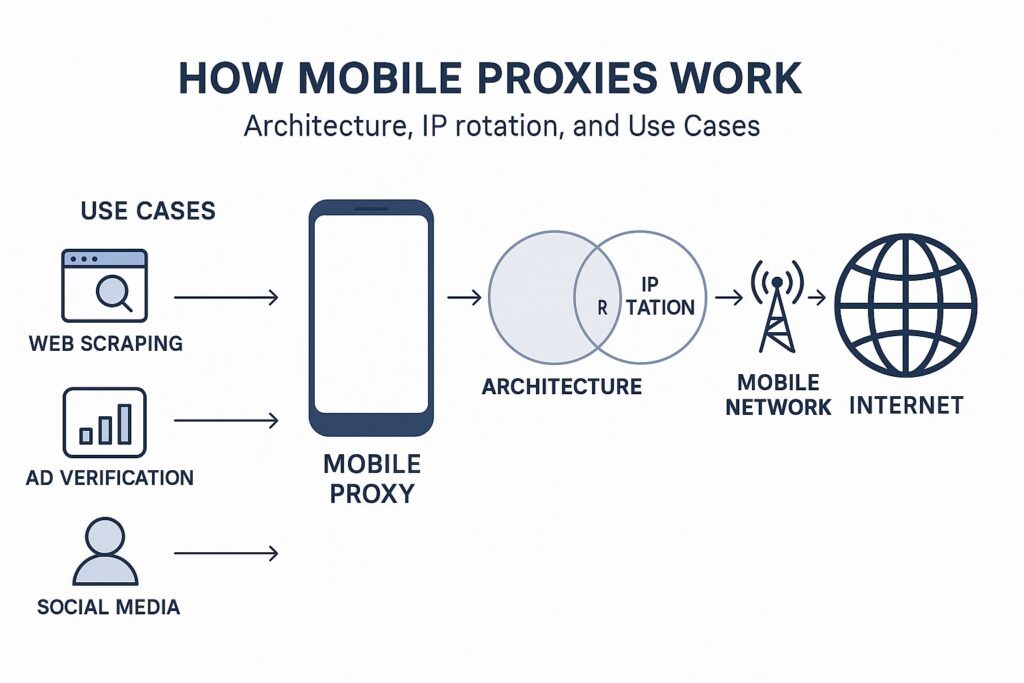
How Mobile Proxies Work: The Architecture
Mobile proxies rely on a sophisticated yet straightforward architecture:
- Mobile Device Network
At the core is a pool of real, SIM-enabled mobile devices, often Android or iOS smartphones connected to mobile carriers like Globe, Verizon, or Vodafone. These devices are constantly online and have dynamic IPs that change naturally.
- Proxy Gateway/Server
A proxy management server routes your requests to one of the mobile devices in the pool. It also handles user authentication, traffic balancing, and IP assignment.
- Client Request Flow
When you send a request through a mobile proxy:
- It reaches the proxy server.
- The proxy selects a mobile device from the pool.
- The request is routed through that device’s mobile IP.
- The response is returned to you through the same channel.
This layered structure makes it very hard for websites to detect proxy usage because it looks like genuine human traffic.
IP Rotation in Mobile Proxies
One of the most powerful features of mobile proxies is IP rotation . Here’s how it works:
Types of IP Rotation:
- Time-Based Rotation : The mobile proxy automatically changes the IP address after a fixed interval (e.g., every 10 minutes).
- Request-Based Rotation : The IP changes after each request or a set number of requests.
- Session-Based Rotation : You can keep the same IP for a session (e.g., 5–15 minutes) to maintain continuity before switching.
Why IP Rotation Matters:
- Avoid IP Bans : Frequent rotation reduces the risk of being blocked or flagged.
- Mimic Human Behavior : Changing IPs like real users helps avoid CAPTCHA triggers and detection.
- Geo-targeted Access : Some services let you rotate IPs across specific countries or regions.
Benefits of Mobile Proxy Architecture
- High Trust Level : Mobile IPs have a high reputation due to being tied to actual telecom users.
- Access to Restricted Content : Easily bypass geo-blocks, IP bans, and access CAPTCHAs with less risk.
- Greater Anonymity : Your real IP remains hidden, while traffic appears highly authentic.
- Scalability : You can run hundreds of parallel sessions across rotating mobile IPs.
Real-World Use Cases of Mobile Proxies
1. Web Scraping & Data Mining
2. Social Media Automation
Platforms like Instagram, Facebook, and Twitter are notoriously strict about automation. Mobile proxies allow tools to log in, post, and interact while minimizing the risk of bans.
3. Ad Verification
Advertisers use mobile proxies to check if their ads appear correctly and are not subject to fraud. They can simulate users in different regions or devices.
4. App Testing & Localization
QA teams use mobile proxies to test how an app behaves in different countries and under different network conditions.
5. E-Commerce Intelligence
Online sellers monitor competitor pricing, reviews, and availability using mobile proxies without being blocked for multiple requests.
6. SEO & SERP Tracking
Mobile proxies enable marketers to track localized search results and keyword rankings from different mobile user perspectives.
Mobile Proxies vs. Traditional Proxies
Potential Limitations
While mobile proxies are powerful, they come with a few caveats:
- Higher Cost : Due to the use of real mobile devices and SIMs.
- Limited Bandwidth : Slower speeds and data caps depending on carrier plans.
- Legal/Ethical Considerations : Must be used responsibly to avoid violating platform rules or laws.
Final Thoughts
Mobile proxies are a cutting-edge solution for secure, anonymous, and effective internet use, especially when traditional proxies fall short.
With their architecture rooted in real mobile networks and powerful IP rotation capabilities, they offer unmatched reliability for businesses engaged in automation, data collection, digital marketing, and app development.
As online defenses grow more robust, mobile proxies provide a future-proof way to stay ahead securely, ethically, and efficiently.
Enjoyed this article?
If TechLatest has helped you, consider supporting us with a one-time tip on Ko-fi. Every contribution keeps our work free and independent.
