
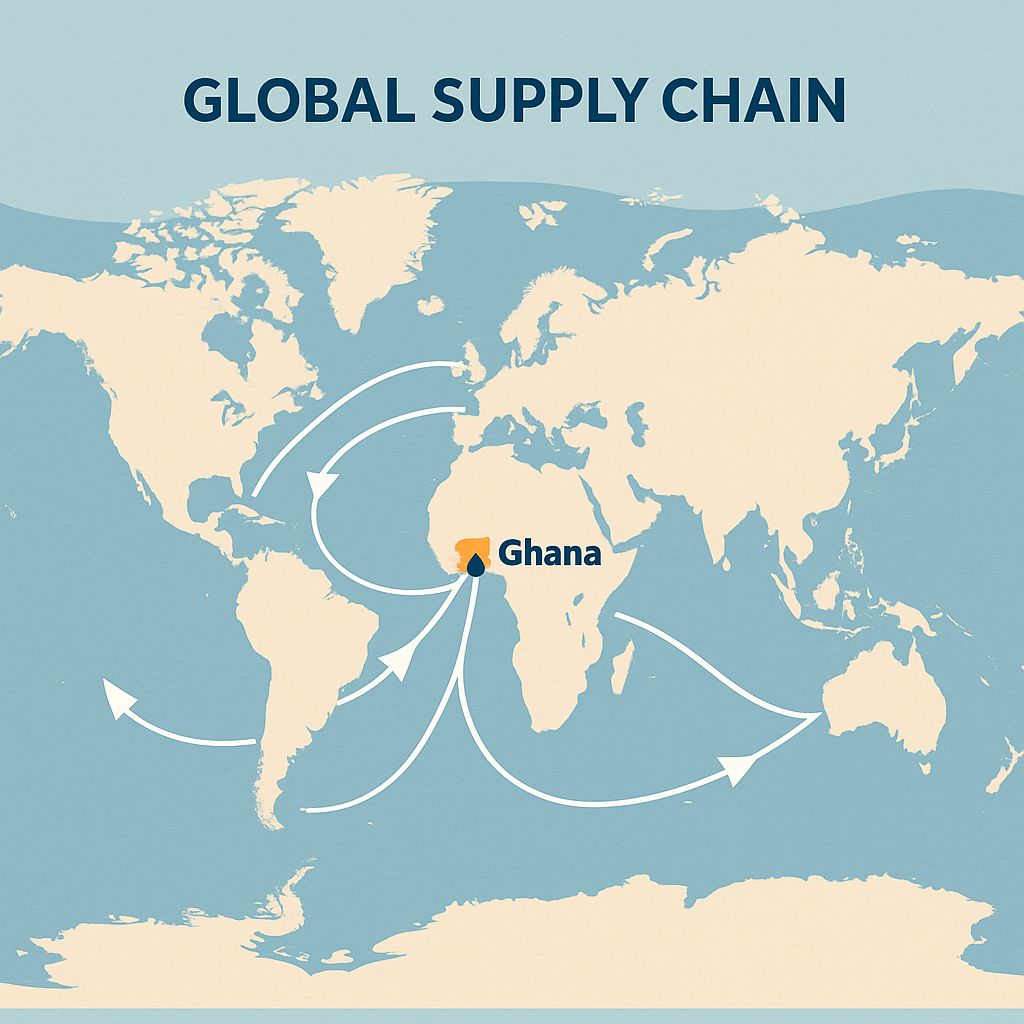
The increasing interconnectedness of global supply chains presents challenges, particularly when operating within regions characterized by rapid growth and significant infrastructure development, such as West Africa. 1
The complexities of global supply chains are amplified when operating in regions undergoing rapid growth and infrastructure development, such as West Africa.
Don’t want to miss the best from TechLatest ? Set us as a preferred source in Google Search and make sure you never miss our latest.
This is especially so in critical sectors like petroleum, natural gas, and civil engineering where the coordination of logistics and supply chains in multicultural and multinational settings becomes a crucial issue.
My experience as an expatriate materials supervisor in Ghana, focused on critical material control for a large-scale construction project, provided a valuable perspective on the confluence of logistics, training, and cultural dynamics.
The region, characterized by its increasing need for infrastructure development and richly diverse cultural base, presents unique opportunities and considerable challenges for supply chain management professionals. 2
This report undertakes an analysis of the challenges encountered and the best practices observed in the realm of logistics management within multicultural environments, drawing upon professional experiences gained from operations conducted in West Africa, with a specific focus on Ghana.
In such operational settings, cultural adaptation and the implementation of effective team management strategies are indispensable for ensuring both logistical and overall operational success.
The imperative to develop a nuanced understanding of local customs, coupled with the need to deploy robust logistical solutions amidst the difficulties posed by evolving infrastructure, has underscored the significance of culturally responsive training programs and adaptive logistics planning.
This narrative will describe my work experiences in Ghana, placed in appropriate theoretical contexts, and will discuss the challenges faced and the lessons learned.
The structure of this report encompasses an exploration of theoretical concepts, a recounting of practical experiences, and a critical reflection on the primary challenges and lessons learned throughout professional practice, ultimately offering insights aimed at optimizing logistics development within diverse cultural settings.
Specifically, it addresses the integration of multinational and local workforces in industrial and infrastructure projects, with the goal of providing a comprehensive understanding of the nuances inherent in logistics management within multicultural environments.
Theoretical Framework
Effectively managing logistics in multicultural environments demands a thorough understanding of international supply chain management principles and the alignment of theory and practice to achieve operational excellence.
Central to the enhancement of processes are strategic sourcing initiatives and the minimization of the total cost of ownership (TCO), complemented by the strategic deployment of key performance indicators (KPIs) to meticulously monitor and continuously improve performance.
Understanding the intricate dynamics of logistics and training within a culturally diverse environment requires drawing upon several established theoretical frameworks. 3
Geert Hofstede’s cultural dimensions theory 4 provides a valuable lens through which to analyze the impact of cultural variations on workplace interactions and communication.
Originating from Geert Hofstede’s research at IBM in the 1960s and 70s, the Cultural Dimensions Theory is a tool for analyzing and comparing national cultures.
It outlines specific cultural dimensions that influence business practices, interpersonal interactions, and diplomatic relations, thereby facilitating cross-cultural understanding. 5
The success of logistics and training in developing markets hinges on understanding key business theories. Firstly, the ‘resource-based view’ posits that a company attains a competitive advantage by cultivating unique internal strengths, particularly within its workforce.
Consequently, the implementation of specialized training programs is essential for building local expertise and ensuring the successful completion of projects.
Second, the concept of ‘supply chain resilience’ is crucial especially in environments that are experiencing infrastructural development and economic change, recognizes the necessity of logistic proposals that need to be agile and flexible, such as Ghana.
This means logistics plans must be flexible and adaptable to handle unexpected disruptions. A theoretical exploration of such frameworks elucidates why effective logistics and training solutions necessitate the tailoring of strategies to the specific local context and the cultivation of a preparedness to adapt swiftly to evolving circumstances.
Human skills are at the core of global team management. The ability to adapt, empathize, and align with local best practices is key to effective collaboration. 6
Moreover, the blend of technological innovation and responsive methodologies, such as Scrum, assists in planning, control, and risk mitigation by merging classic logistics methods with contemporary approaches.
In essence, successful logistics management in multicultural cultures necessitates a synthesis of strategic thinking, theoretical insight, and adaptive pragmatism with specific focus on human resource development and a sense of cultural sensitivity.
Comparative Operational Experiences: Ghana and Beyond
My professional trajectory has been characterized by significant multicultural engagements, particularly in navigating complex logistics and supply chain challenges across a diverse array of global projects.
A particularly noteworthy experience was in West Africa, specifically Ghana, where I served as a Materials Supervisor on the Sustainable University Complex, a large-scale civil construction project.
In this role, I was responsible for orchestrating the receipt and meticulous management of critical materials, leading a team composed predominantly of local professionals.
This encompassed the management of intricate import schedules and the rigorous assurance of the quality and timely availability of essential inputs.
Ghana presents a developmental logistics environment where the primary focus of training is on foundational capacity building, encompassing core warehousing principles, transportation safety protocols, and the development of essential infrastructure. 2
The multicultural environment is notably heterogeneous, featuring a multitude of indigenous ethnic groups and a considerable international presence, necessitating a highly adaptive and culturally sensitive training methodology. 3
Effective knowledge transfer requires understanding local power dynamics, nuanced communication strategies, and bridging linguistic and cultural divides.
Recognizing the varying levels of technical skills within the team, I implemented comprehensive training programs tailored to the project’s specific needs and the local context.
Workshops on inventory management, material inspection, and documentation procedures, emphasizing practical application and hands-on learning, significantly contributed to the team’s technical development and enhanced local operational standards.
Beyond my experiences in Ghana, my professional journey includes a significant engagement with a Brazilian oil company in a major deepwater venture, where I supervised supply chain management for the multinational contractor in Singapore.
In this capacity, I served as a strategic liaison between the French project team and Brazilian stakeholders, facilitating technology transfer and addressing complex logistical challenges in submarine construction, effectively bridging logistical gaps and ensuring continuous project progress despite international constraints.
This prior experience provided a valuable framework for analyzing key aspects of international markets. Effective knowledge transfer, as observed in both contexts, fundamentally requires a deep understanding of local power dynamics, the application of nuanced communication strategies, and a dedicated commitment to bridging significant linguistic and cultural divides.
Key comparative technical distinctions between the Ghanaian and Brazilian contexts include their respective training objectives, where Brazil placed a strong emphasis on advanced systems integration, adherence to complex regulatory frameworks, and the optimization of existing infrastructure, while Ghana’s focus was primarily on foundational logistics skill development, enhancing infrastructure capacity, and the implementation of essential safety protocols.
Regarding multicultural complexity, Brazil exhibits regional variations within a predominantly Latin American/European cultural sphere, whereas Ghana necessitates a high degree of cultural heterogeneity, demanding significant intercultural competence in training delivery.
In terms of technological integration, Brazil focused on advanced data analytics and the integration of sophisticated automation systems, while Ghana emphasized basic digital literacy and the progressive adoption of technology.
Finally, concerning communication dynamics, challenges related to linguistic diversity were comparatively less significant in Brazil, while Ghana required a substantial emphasis on overcoming linguistic and cultural communication barriers.
Overall, while both markets necessitate tailored training and logistics development strategies, the operational and cultural contexts diverge significantly.
In Ghana, the emphasis is on establishing fundamental infrastructure and operational capabilities within a highly diverse cultural environment.
In Brazil, the focus shifts to optimizing existing systems and adapting to the demands of a complex, globally integrated economy. Both scenarios mandate a rigorous application of intercultural communication principles and a deep understanding of local socio-economic dynamics.
Challenges and Lessons Learned
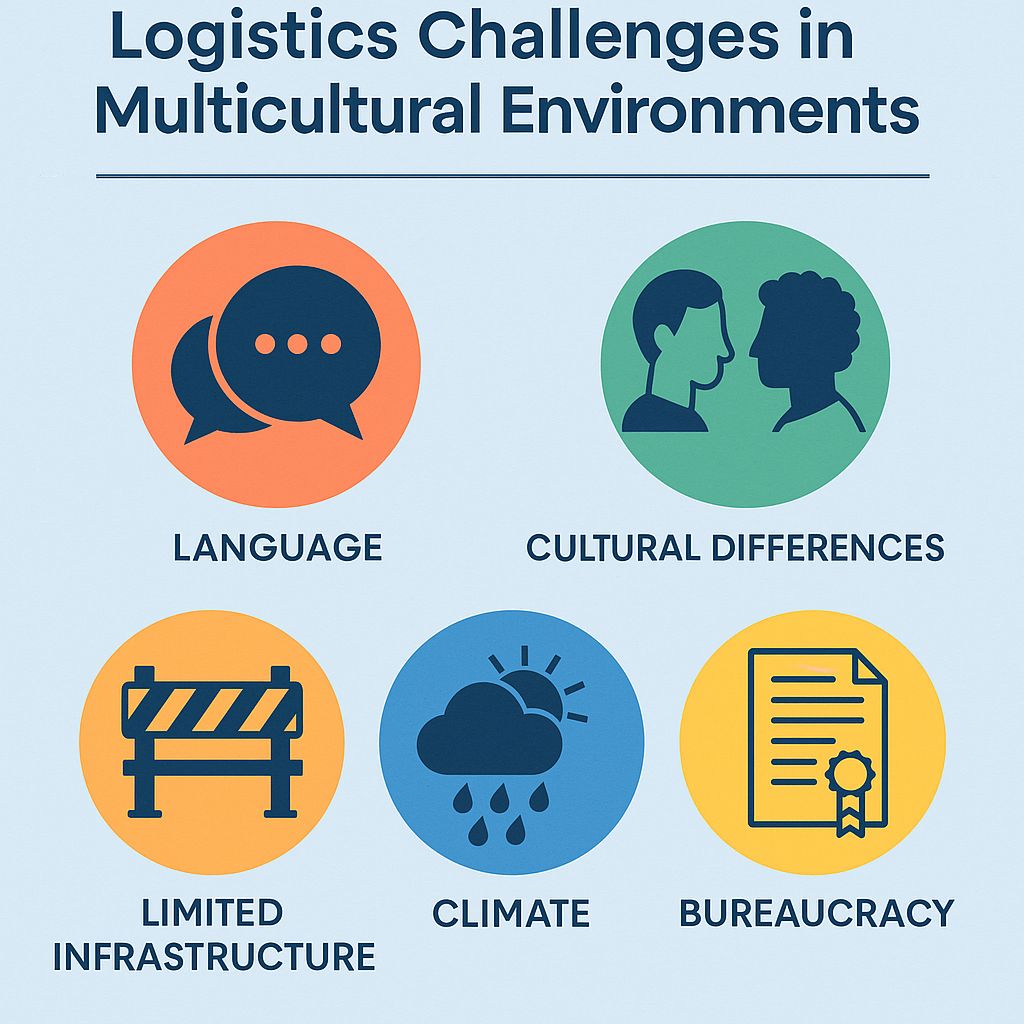
Managing multicultural teams and fostering effective collaboration across differing cultural norms and work practices presented a significant challenge in international projects, particularly in Ghana. 7
In Ghana, navigating the complexities of infrastructure development, including transportation networks and power supply reliability, necessitated meticulous logistical planning. 1
Cultural variations in communication styles and approaches to work required the adoption of a flexible and culturally responsive leadership style. 8
Building a foundation of trust and fostering effective communication within diverse teams proved to be of paramount importance.
It became evident, as supported by external findings, that a rigid adherence to standardized management practices was less effective than embracing collaborative approaches that actively valued local knowledge and fostered genuine partnerships. 9
Engaging directly with local suppliers and logistics providers offered crucial insights into the nuances of the market and effectively mitigated potential risks.
The strategic development of local skillsets through targeted training and comprehensive mentoring programs not only empowered local professionals but also made significant contributions to long-term capacity building within the region.
A thorough understanding of local regulations and customs procedures was essential for ensuring compliance and avoiding costly delays, necessitating the cultivation of strong relationships with local authorities and a proactive awareness of evolving regulatory requirements.
Table 1:Key logistics challenges encountered in Ghana and the corresponding strategic lessons learned through professional experience.
Complex international projects require robust planning and control strategies to address logistical challenges and maintain compliance with strict deadlines.
The strategic integration of digital technologies and agile methodologies proved to be essential for enhancing operational efficiency and achieving consistent, reliable results.
These diverse experiences significantly strengthened skills in negotiation, quality assurance protocols, and the effective management of multinational teams.
The consistent implementation of KPIs and a focused approach to cost management were fundamental in achieving strategic objectives and demonstrably improving overall logistics performance under challenging conditions.
In essence, successful management within such dynamic environments necessitates a careful balance of technical expertise, a deep understanding of cultural sensitivities, and the deployment of adaptable strategies that prioritize collaboration and meaningful local engagement.
Conclusion
Effective logistics management in multicultural environments demands a multifaceted approach, seamlessly integrating adaptability, strategic planning, and astute leadership to navigate the inherent complexities.
Professional experience across diverse international projects, notably in the West Africa region, underscores the critical role of blending established logistics practices with contemporary methodologies and the strategic application of digital solutions to enhance operational efficiency and maintain high standards of quality.
Strategic development of local teams is the foundation of successful multicultural logistics. Comprehensive training programs, meticulously designed to address specific skill gaps and cultural nuances, coupled with robust control systems, are essential for fostering integrated and transparent management frameworks.
The insights garnered from experiences within Ghana’s dynamic logistics landscape provide invaluable lessons for crafting resilient and effective supply chain strategies within similar multicultural contexts.
These insights highlight the enduring necessity of cultural sensitivity, the importance of adaptability in the face of unforeseen challenges, and the strategic advantage of leveraging local knowledge and expertise.
Furthermore, the integration of theoretical frameworks with practical application proves pivotal in the development and implementation of successful training and logistics strategies.
This synergy is not merely project-specific; it carries broader implications for supply chain professionals operating within evolving economies.
Investing in local capacity building, fostering open and effective communication channels across diverse teams, and developing flexible, context-specific logistics solutions are paramount for achieving sustainable and inclusive economic growth. 10
Looking forward, the field would significantly benefit from deeper exploration into the transformative impact of emerging technologies on international logistics management.
Specifically, future market research should focus on the nuanced integration of agile methodologies and advanced sourcing strategies to optimize operations within multicultural settings.
A sustained commitment to collaborative partnerships, coupled with a nuanced and respectful understanding of cultural dynamics, will be crucial in unlocking the full potential of diverse economies and ensuring the continued evolution of logistics practices in an increasingly globalized world.
References:
- How globalization affects logistics in Ghana and Germany | by Thomas Sander – Medium, accessed April 1, 2025
- The Future of Infrastructure Development in Ghana: Opportunities and Challenges, accessed April 1, 2025
- Indigenous cultures and employee efficiency: the moderating effect of cronyism in state-owned enterprises in Ghana | Emerald Insight, accessed April 1, 2025
- The 6-D model of national culture | Geert Hofstede, accessed April 1, 2025
- Hofstede’s Cultural Dimensions Theory | Helen Wale – Corporate Finance Institute, accessed April 1, 2025
- Managing global projects and multicultural teams: 5 benefits, 5 challenges and 5 actions, accessed April 1, 2025,
- Promoting Effective Management of Cultural Diversity in Multinational Construction Project Teams – MDPI, accessed April 1, 2025
- Cultural Differences – Ghana – crossculture academy, accessed April 1, 2025
- Pitfalls and blueprint for success in Ghana’s oil and gas sector – Zed Multimedia, accessed April 1, 2025
- Powering Progress: Renewable Energy in Ghana – The Borgen Project, accessed April 1, 2025, https://borgenproject.org/renewable-energy-in-ghana-3/
ARTICLE AUTHORED BY JONATHAS RAMOS CERQUEIRA
” For 14 years, I’ve cultivated a comprehensive career in supply chain management, navigating diverse sectors like oil and gas, naval, renewable energy, and construction. My expertise spans procurement, logistics, quality control, and project management, bolstered by international experience in the USA, Ghana, and Canada. I hold an MBA in Strategic Management in Foreign Trade and a bachelor’s degree in production engineering, complemented by certifications in Scrum, ISO 9001, and non-destructive testing. Throughout my career, I’ve consistently managed procurement, conducted meticulous inspections, and optimized supply chain processes to drive efficiency and compliance.” CERQUEIRA, Jonathas.
Enjoyed this article?
If TechLatest has helped you, consider supporting us with a one-time tip on Ko-fi. Every contribution keeps our work free and independent.
