Highlights
- Opera Neon AI launches ODRA, a new Deep Research Agent designed for faster and more detailed research.
- ODRA breaks down complex queries into multiple smaller tasks, processing them simultaneously for efficiency.
- A built-in supervisor AI ensures accuracy and depth, setting a new benchmark in intelligent browsing.
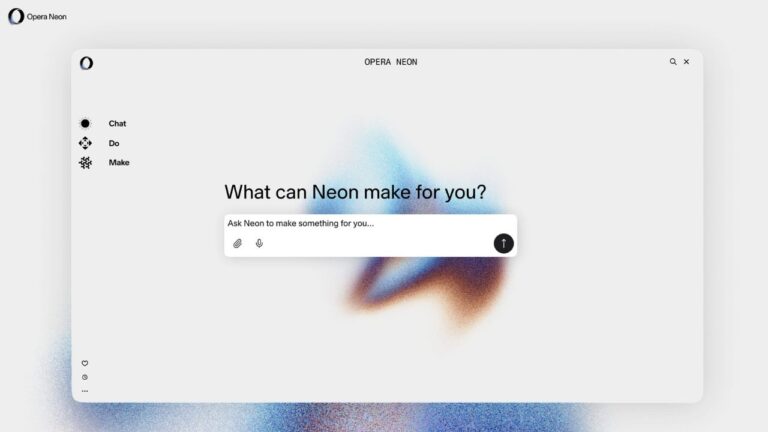
The idea of web browsing is changing fast. People now expect more than just quick answers, and Opera Neon AI seems to understand that perfectly.
The browser has introduced a new research-focused agent called ODRA , short for Opera Deep Research Agent .
Don’t want to miss the best from TechLatest ? Set us as a preferred source in Google Search and make sure you never miss our latest.
This new feature is designed to handle serious research work right inside the browser without needing to switch between different tools or websites.
Opera Neon AI changes smart browsing with its advanced deep research agent ODRA
What ODRA actually does?
Earlier, Opera Neon came with three agents: Do, Make, and Chat. Each one has its own job like creating text, completing tasks, or chatting naturally.
But with the arrival of ODRA , the browser gets something completely different. ODRA focuses on deep and meaningful research , giving users detailed and well-structured results instead of short summaries.
When you type a big or complex question, ODRA doesn’t process it in one go. It splits it into many smaller parts and handles them all at the same time.
It’s a bit like how a GPU works instead of a CPU . A CPU completes tasks one after another, while a GPU does many at once.
ODRA works the same way, using this kind of “division of labor” logic to make research faster and more complete.
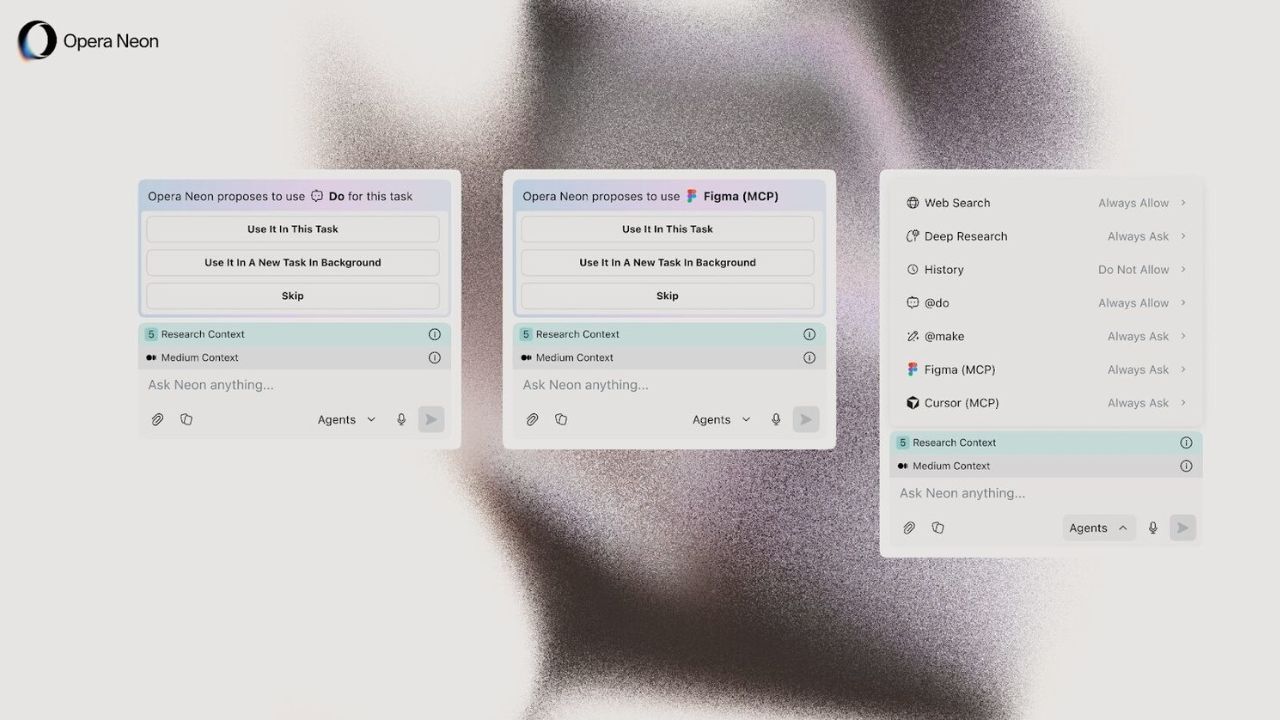
Image Credits: Opera
How ODRA keeps results accurate?
Working fast is not enough if the answers are not right. To handle that, Opera added a supervisor AI inside the system.
Once ODRA finishes all the smaller research tasks, this supervisor checks if the collected information is correct and complete. If it finds that something is missing or unclear, it sends the agents back to collect more data.
Opera says that this whole process usually takes around 5 to 20 minutes depending on the topic. During early testing, ODRA performed really well and came second in the DeepResearch benchmark , right after Google’s Gemini 2.5 Pro Deep Research model . That’s quite impressive for a browser-based AI.
How to use ODRA?
ODRA will appear inside the main Omnibus interface of the Opera Neon browser along with Do, Make, and Chat.
You can ask it complex academic or technical questions and it can dig deep into the web for real insights. For example, it can explain the latest ideas in game design and even explore old theories like MDA.
Opera Neon currently costs $19.99 per month and users have to join a waitlist to get access. The company says that ODRA will soon be fully rolled out to all premium users.
- Windows 11 Agentic OS Brings AI Intelligence Straight to Your Desktop
- Facebook AI Photo Suggestions Can Now Auto Edit and Analyze Your Pictures
- Comet Browser Launches Worldwide with Free Access for All
Overall, the addition of ODRA shows that Opera Neon is moving beyond being a normal browser. It’s not just helping users find links anymore, it’s actually doing research for them.
By mixing parallel processing with a supervising AI, Opera has created something that feels like having a real research assistant built into your browser.
This could be the start of a new phase in browsing where your AI doesn’t just search, it actually learns and reasons with you.
Enjoyed this article?
If TechLatest has helped you, consider supporting us with a one-time tip on Ko-fi. Every contribution keeps our work free and independent.
