
This story was originally published on July 24, 2025.
B2B markets now reset week to week. Surprise launches land without warning, and AI -generated content multiplies faster than anyone can vet. Miss one shift, and the deal is gone.
Don’t want to miss the best from TechLatest ? Set us as a preferred source in Google Search and make sure you never miss our latest.
Many product marketing teams test ChatGPT or Perplexity to speed up research, only to discover shallow answers, missing context, and lagging updates. In a cycle measured by quarters and competitive moves measured by days, that information gap costs deals and drags strategy.
This article explains where general-purpose AI falls short for competitive intelligence (CI), which inputs change positioning and sales, and how domain-specific AI captures and distributes the right evidence with more precision.
Content Table
What the Web Shows vs. What the Market Says
Open-web content in 2025 tends to focus on what competitors want you to see. Teams build in stealth, launch abruptly, and flood the surface web with manufactured truths . Two changes make this more obvious:
Stealth launches are the norm . More teams now build in silence and release only when they’re confident the product delivers value. This means critical product shifts remain invisible until launch day. If nothing’s published, nothing gets crawled.
The signal-to-noise ratio is broken . AI enables the mass production of staged content, such as forums, reviews, and “organic-looking” blog posts that are often paid placements. Sorting authentic signals from engineered posts now takes more time.
These dynamics mean open-web summaries skew toward official messaging, PR, and search-optimized comparisons. The result is a clean story without the messy parts that sway deals, like pricing tests, packaging trials, and feature tradeoffs that surface in real conversations.
The Critical Signals That Win Deals
Critical signals are the earliest, most trustworthy indicators that should change your positioning, pricing, or sales plan. In B2B SaaS , they’re grouped into explicit actions, implicit behavioral cues, and situational company changes.
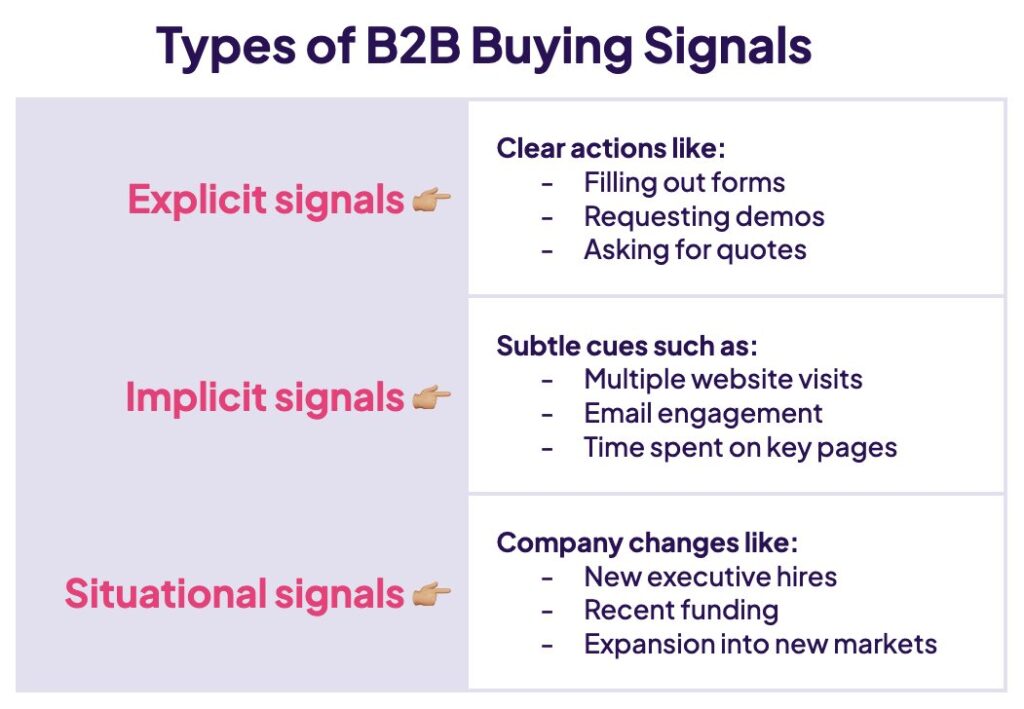
Source:The Ultimate Guide to Signal-Based Selling in B2B | emlen
Most of these indicators live inside your own stack and conversations, not on Google. Teams identify them through:
- Competitor name-drops on sales calls and objection patterns tagged in Gong or Zoom notes
- Pricing page deltas, release notes, and changelogs that hint at roadmap pivots
- Hiring spikes in specific teams that forecast product direction
- CRM fields, CS tickets, and Slack threads that capture real buyer language
These signals are time-stamped, rooted in actual buying scenarios, and usually too early or subtle to show up on the open web. When a product marketing manager (PMM) feeds them into battle cards, pricing guidance, or win/loss briefs with sources and dates, sales teams stop guessing and start selling with real insight.
The Limitations of General AI Tools in Competitive Intelligence
General chatbots like ChatGPT and Perplexity are optimized for quick Q&A, not for source-grounded, continuous market monitoring across internal systems.
No Proactive Monitoring
General AI tools don’t act as change detectors. If a competitor updates a pricing page or drops a new feature in release notes, you won’t know unless someone manually checks. That delay turns into stale content and missed sales context.
Source Reliability Issues
Hallucinations and unreferenced claims still occur, which is unacceptable when enabling field teams. Independent comparisons describe ChatGPT as strong for conversational help yet limited for sustained research, while Perplexity favors quick answers with citations over long, multi‑step analyses.
No First‑Party Context
Out-of-the-box systems do not index Slack, Gong, or Salesforce without custom integration and governance, and vendor materials do not indicate turnkey ingestion of those sources for CI-grade cross-referencing.
Variance in Precision and Accuracy
General assistants aren’t a dependable source of truth for go‑to‑market decisions. A study comparing eight general-purpose chatbots reports meaningful differences in precision and accuracy between systems. That variation serves as a caution when drafting facts for battle cards or executive briefings.
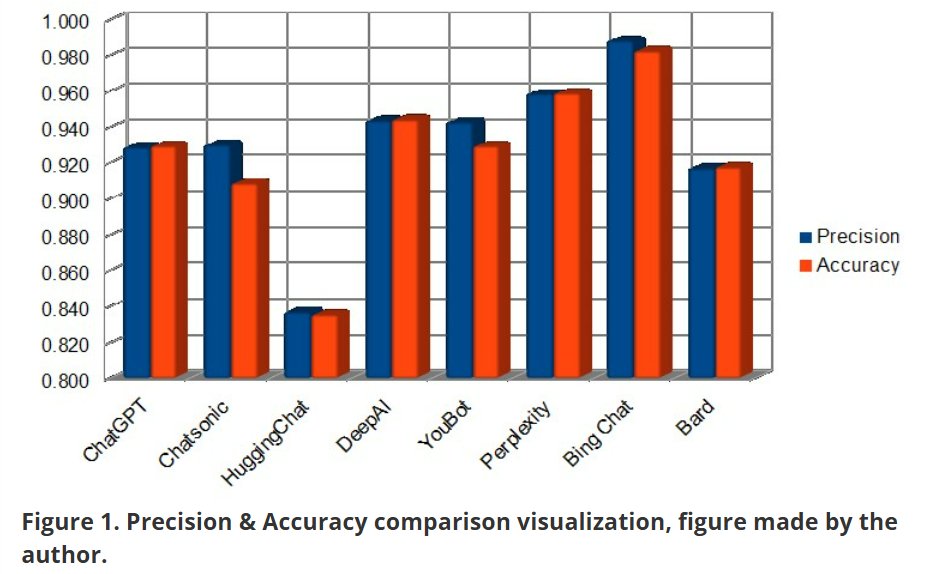
Source:An Evaluation of General-Purpose AI Chatbots: A Comprehensive Comparative Analysis | InfoScience Trends
For PMMs, relying on generic chatbots risks stale battle cards, misinformed positioning, and review cycles that fix bad inputs instead of guiding deals.
What Domain‑Specific AI Does Differently
Specialized CI systems watch the signals that change deals and push them into PMM and sales workflows for review.
Unlike broad assistants trained on general web data, domain-specific models rely on focused corpora and first-party evidence, are scoped to CI tasks, and deliver higher utility on those tasks through customization and efficiency.
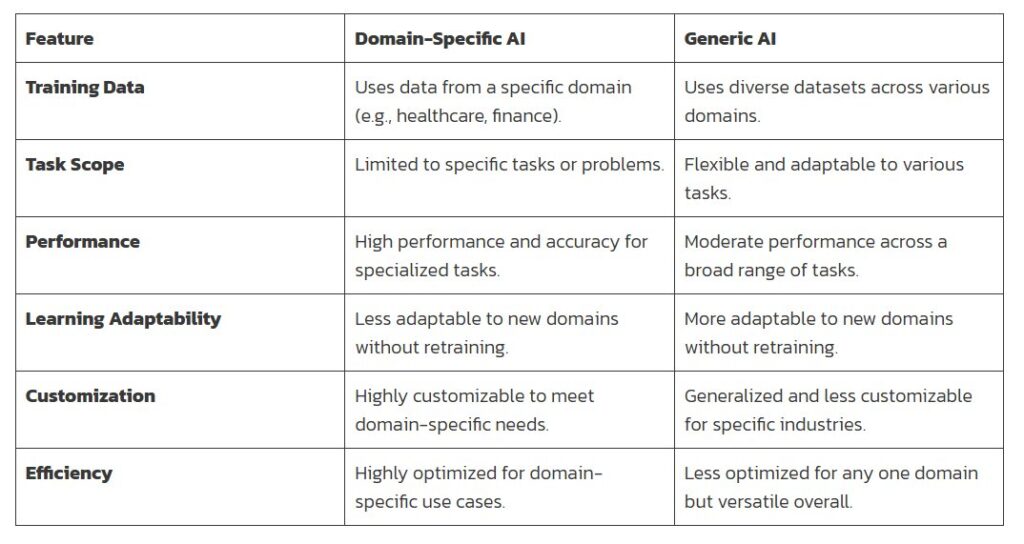
Source:Domain-Specific AI Models Explained: The Future of Business AI | DaveAI
Key features:
- Real-Time Signal Capture : Tracks website changes, pricing shifts, release notes, and hiring across named competitors with configurable thresholds and alerts.
- Noise Filtering : Prioritizes signals by account relevance, ICP, and open opportunities, downgrading promotional or manipulated content so sellers focus on what affects the pipeline.
- Workflow-Shaped Outputs : Converts events into battle-card diffs, pricing notes, objection-handling scripts, and weekly CI digests that publish to Slack or the enablement hub.
- First-Party Grounding and Review : Ingests Slack, Salesforce, and Gong to surface competitor mentions and objection patterns, then routes to a PMM review step before field distribution to prevent hallucinations.
Steve , the AI-powered CI platform developed by Trissino, is an example. It monitors competitor websites, messaging changes, feature updates, and pricing shifts. It then turns those events into automated battle cards and Slack-native alerts that teams can access without leaving their workflow.
Domain-specific systems like Steve work faster and more reliably because they’re built for competitive intelligence, not general knowledge synthesis.
Real-World Use Cases: How Teams Turn Signals into Wins

Image:B2B business strategy concept by SuPatMaN | Shutterstock
The following use cases from Trissino’s Steve platform demonstrate how domain-specific AI empowers B2B teams to turn verified signals into enablement, all while keeping PMMs in full control of accuracy, timing, and workflow.
Faster Battle Card Updates
A 300-person B2B SaaS company replaced manual edits with weekly auto-refresh of competitor pages, pricing notes, feature deltas, and message tests using Steve. A PMM approval step gates changes before they publish, which keeps guidance field-ready and reduces ad hoc requests from sales.
Automated Sales Info Requests
Instead of constantly pinging PMMs for competitor insights, sales reps can query the latest pricing comparisons or objection responses tied to competitors and product lines directly within their workflow. This allows PMMs to shift from constant ad hoc responses to curating high-signal, up-to-date insights.
Deep First‑Party Integration
Steve aggregates and organizes competitive insights from sources such as websites, LinkedIn, news articles, and product updates.
These are delivered as automated battle cards and alerts in Slack. A PMM review verifies each claim before it becomes shareable “truth.” This reduces hallucination risk and builds trust with the field.
The Cost of Manual Research in 2025
When competitors shift weekly, manual collection loses ground. The hidden cost shows up as missed sales enablement , outdated decks, and slower cycles. General-purpose AI tools can’t fill that gap. External primary research can help, but it’s time- and cost-intensive.
Typical primary research projects often cost tens of thousands of dollars and take weeks to complete. Custom projects range from $25,000 to $65,000, depending on the method, scope, incentives, and audience incidence. These are ballpark figures that vary by niche and complexity.
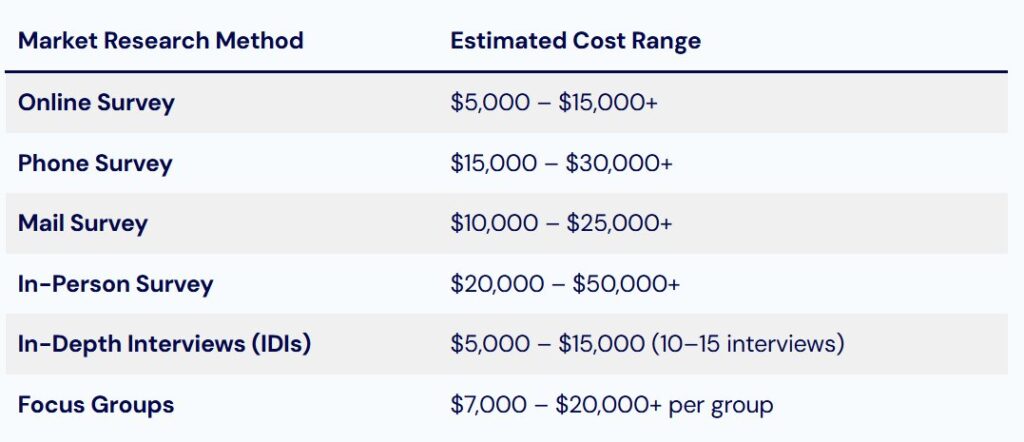
Source:How Much Does Market Research Cost in 2025? | Drive Research
Competitive research remains valuable, especially for messaging or product strategy. The CI gap occurs between those infrequent studies. A domain-specific AI keeps discovery continuous by capturing web changes and surfacing first-party signals to PMMs and the field throughout the quarter.
Conclusion: From Guesses to Proven Signals
Competitive intelligence is effective when it converts verified, live signals into actionable workflow decisions. General-purpose AI tools can assist with summaries, but they fall short at proactive monitoring, provenance, and first-party integration.
Domain-specific AI integrates web change detection and internal evidence, filtering noise to deliver verified updates that help sellers succeed. If your team is evaluating where to invest, start with the signals that already flow through your calls, tickets, and CRM, then deploy CI AI that treats those signals as the system of record. Generic AI looks clever. Verified signals win deals.
References :
- Invisible rivals and manufactured truths. (2025, August 7) . The CI Now Team. https://cinow.substack.com/p/invisible-rivals-and-manufactured
- Grewenig, M. (2024, July 19) . B2B Sales Success with Signal-Based Selling . emlen.io. https://www.emlen.io/blog/signal-based-selling
- ByteBridge. (2025, February 20) . Deep Research Capabilities: Comparing ChatGPT, Perplexity, Grok, and Kompas AI . Medium. https://bytebridge.medium.com/deep-research-capabilities-comparing-chatgpt-perplexity-grok-and-kompas-ai-012d643fef5a
- Chalyi, O. (2024, June 1) . An Evaluation of General-Purpose AI Chatbots: A comprehensive Comparative analysis . InfoScience Trends, 1(1), 52–66. https://doi.org/10.61186/ist.202401.01.07
- Mishra, S. (2025, February 25) . Domain-Specific AI Models explained: The future of Business AI . DaveAI. https://www.iamdave.ai/blog/domain-specific-ai-models-explained-the-future-of-business-ai/
- How much does primary market research cost in 2025. (2025, April 23) . The Farnsworth Group. https://www.thefarnsworthgroup.com/blog/market-research-cost
- Taylor, E. (2025, May 14) . How much does market research cost in 2025? Drive Research. https://www.driveresearch.com/market-research-company-blog/how-much-does-market-research-cost
Featured Image : Assorted AI apps on an iPhone | Talukdar David | Shutterstock
Enjoyed this article?
If TechLatest has helped you, consider supporting us with a one-time tip on Ko-fi. Every contribution keeps our work free and independent.
