Highlights
- For athletes, AR and VR can be used for realistic simulations during practice, improved skills in real time and reducing injury risks.
- Viewers enjoy a more immersive experience of live sports, from VR seating in the stadium to live screen AR stats.
- These technologies are there to break down barriers, to make games more accessible to people with disabilities and in places that have few facilities.
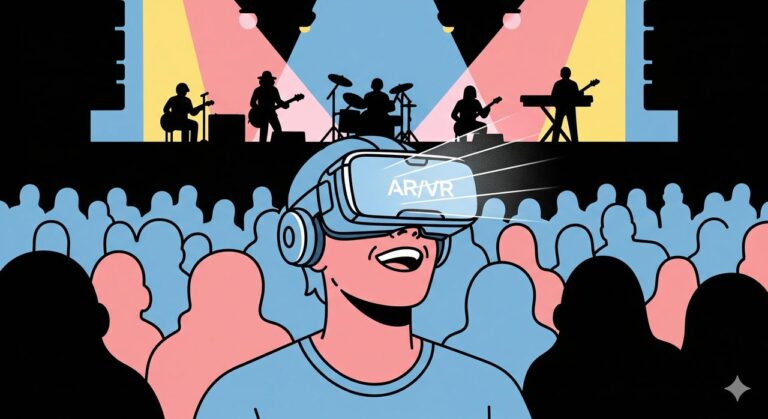
Innovation has always been a simple fact of life in sports. From the development of modern equipment to cutting-edge analytics, technology has been a driving force behind how players train, coaches plan, and fans engage with the excitement of competition.
In the last few years, Augmented Reality (AR) and Virtual Reality (VR) have raised the bar for performance, engagement, and accessibility.
Don’t want to miss the best from TechLatest ? Set us as a preferred source in Google Search and make sure you never miss our latest.
Now expanding far beyond gaming and entertainment, AR and VR are also playing an increasingly important role in the world of sports.
These tools are revolutionizing sports training, broadcasting, injury prevention, and fan engagement, and making sports more inclusive for those who were once excluded. This story goes deep into the future of AR/VR in Live Sports and Concerts.
Content Table
Evolution of Sports Training: From Traditional Methods to Digital Simulations
For years, sports training was limited to repetitive drills, video feedback, and the trained eye of a coach. Although successful, this method had its own limitations:
- Human error in analyzing performance.
- Inability to recreate real-match conditions.
- Higher risks of injuries due to overtraining.
The introduction of AR and VR to sports training has altered all of this. And now, players can walk into interactive, digital spaces that feel as intense as a real game, all within the confines of the training ground. Coaches, meanwhile, get to see real-time data on movement patterns, posture, and tactical decision-making.
How VR Is Changing Practice Sessions
VR headsets allow players to relive match situations or practice for high-pressure moments, including penalties or tie-breaking serves. The immersive experience aims to enhance not only technical skills but also mental readiness.
How AR Adds Precision to Training
AR glasses can superimpose real-time data, like the aspiring heart rate, distance traveled, and biomechanical posture. This kind of information enables athletes to make corrections on the spot and instantaneously, resulting in a more effective training procedure than most traditional drill exercises.
How AR and VR are Transforming Sports Training
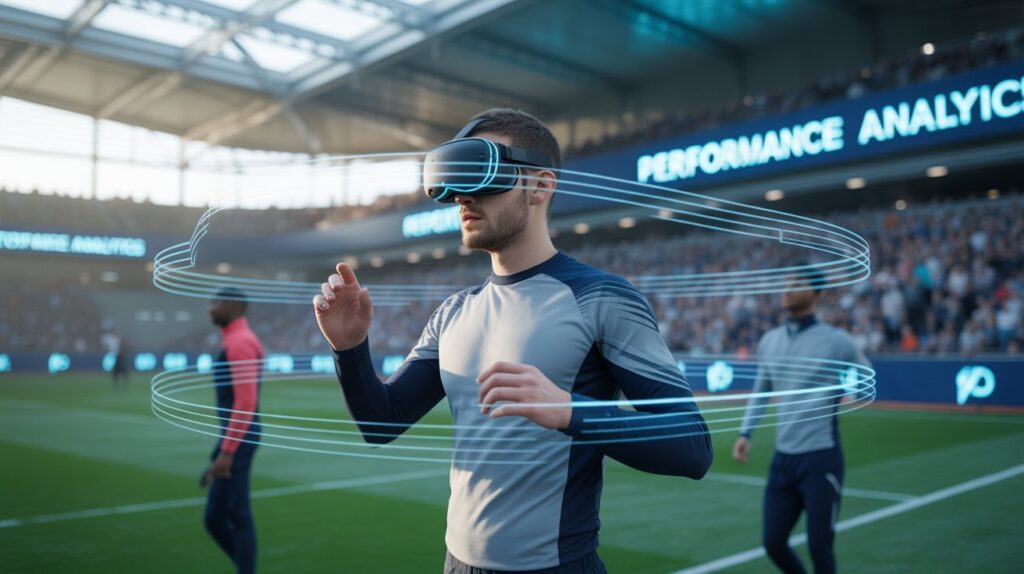
The magic of AR and VR is that they can create real-life scenarios that athletes encounter in competition.
- Skill Refinement : It also provides players with a frame-by-frame analysis of their moves to help gauge improvement.
- Tactical Awareness : Teams can exercise tactics in virtual reality and try out moves without losing points in a match.
- Reduced Fatigue : Which means, unlike traditional on-field drills, participants are at minimal risk of injury due to overtraining.
- Mental Preparation : The VR environment will enable athletes to experience public actors and bad weather, helping them maintain the calming effect during actual games.
For instance, NFL teams playing American football already utilize VR platforms to train quarterbacks this way, letting them practice reading defenses without physically having to step onto the field. Likewise, tennis players can practice serves and volleys and study opponent preferences in real time.
Enhancing Experience for Athletes, Coaches, and Fans
The benefits of AR and VR go beyond training. These technologies are also causing the entire sports ecosystem to be reshaped.
Benefits for Athletes
- Immediate feedback on posture, stamina, and tactical moves.
- The ability to see a competition in his mind before he has ever stepped onto the field.
- Lower chances of physical burnout due to reduced repetitive drills.
Benefits for Coaches
- They can practice strategies anonymously in simulated game conditions.
- Performance-based analytics for more realistic guidance with data.
- Chance to watch multiple players at the same time with AR overlays.
Benefits for Fans
- AR-enhanced game feeds featuring live data and action.
- VR headsets allow spectators to watch games from the perspective of individual players, or even from virtual seats in the stadium.
- Greater engagement, in which fans belong to the game rather than acting as passive observers.
In short, AR and VR are removing the volatility between players and viewers to create an ecosystem where every single person is at the heart of the action.
Making Sports More Accessible Through AR and VR
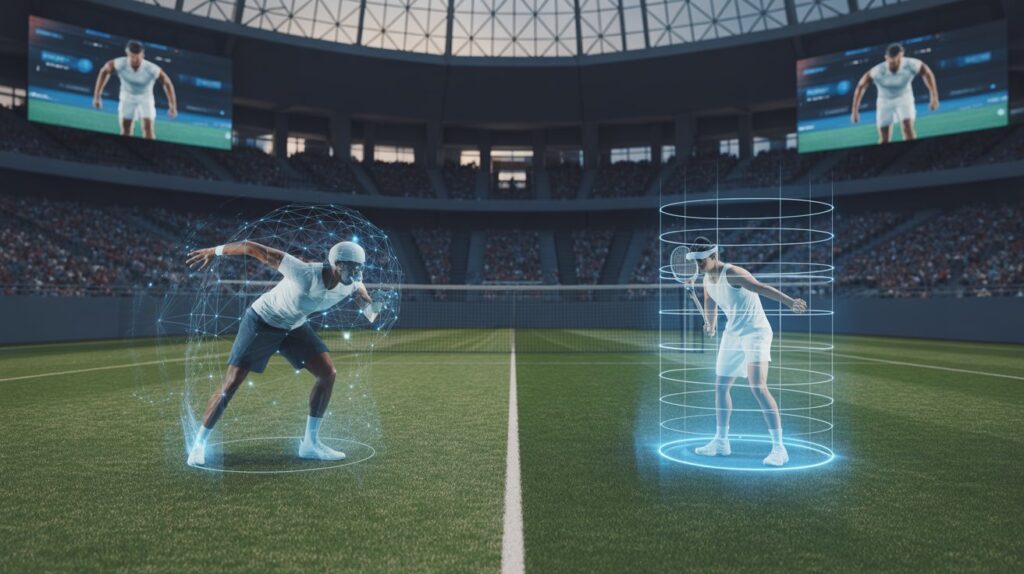
Accessibility has always been a concern in sports, but AR and VR are closing that gap.
- For People with Disabilities : VR simulations enable those with a disability to experience sporting events virtually. AR could deliver live captions or sign-language overlays for audience members with hearing impairments.
- For Underdeveloped Regions : Communities without infrastructure can train in virtual environments. Young athletes can train in virtual stadiums without having to pay for expensive gear.
- For Broader Audiences : Rural fans can watch overseas matches in immersive VR streams. Kids can try new sports with AR learning apps, even before they set foot on the actual field.
Making sports more accessible and affordable, AR and VR are enabling talent discovery on a global basis.
Injury Prevention and Rehabilitation with AR and VR
Injuries are inevitable when it comes to playing sports, but we can leverage technology to decrease their number and severity.
- Prevention : AR devices can offer real-time warnings if an athlete is increasing their risk of injury, like bad running/gym form.
- Rehabilitation : Injured athletes can use VR-based therapy programs to simulate movements in a safe space and quickly recover and regain confidence.
- Minimizing Overuse : Simulated drills that replicate a maneuver can relieve the stress on the joints and muscles, decreasing the risk of stress fractures or ligament damage.
For example, basketball players recovering from knee surgeries could practice game situations in virtual reality without putting the full weight on their joints. And not only does it help heal, but rapid healing gets you back in shape.
Sports Broadcasting: The AR and VR Revolution
Perhaps the most visible impact of AR and VR is probably in sports coverage and fan interaction.
- AR in Broadcasting : Live streams are now layered with analytic overlays like player speed stats or shot trajectory maps. Cricket fans, for instance, will be able to follow ball speed and swing trajectory directly on their screens.
- VR for Spectators : VR headsets allow the viewer a front-row seat from the comfort of their home. Picture watching the FIFA World Cup championship game from a seat in a virtual stadium, listening to the roar of the crowd as if you were there.
- Immersive Storytelling : Fans will be able to rewatch key highlights from multiple angles, and they can even jump into a player’s point of view for a 360-degree replay.
It has turned sports into something that is multisensory, far more than traditional broadcasting.
- The Evolving Landscape of the Virtual Reality Sector
- Augmented Reality vs. Virtual Reality: What’s the Difference?
- Best OTT Streaming Devices in 2025: Roku, Fire TV, Chromecast, Apple TV, and More
The Future of AR and VR in Sports
The story of AR and VR in sports is just getting started. As these technologies develop, we will see:
- Live-action, fully integrated stadium experiences in which distant fans participate along with the players.
- An artificial intelligence-driven AR tool that provides personalized training insights for each individual athlete.
- Extensive use in schools and academies renders sports education more vibrant.
- Integrate with wearable devices for lifelong real-time monitoring during training and in match play.
The possibilities are endless, and we are only going to see it grow as AR/VR devices become more affordable and become more integrated into sports overall.
Conclusion
The impact of AR and VR in sports is much more than a temporary gimmick; they are fundamentally changing the ways we train, play, and watch games. For the athlete, there are sophisticated training tools, for the coach, rich analytical insights; and for fans, unprecedented levels of immersion.
Perhaps most importantly, this technology makes sports more inclusive and accessible, so everyone can join in the fun.
As both AR and VR continue to develop, the influence of the two on sports will only strengthen, allowing space for a future where technology and athletic prowess intertwine seamlessly. The new decade will transform sports from just on-court action to an immersive, data-driven, and inclusive experience that surrounds it.
Featured Image : AI-Generated (Google Nano Banana )
Enjoyed this article?
If TechLatest has helped you, consider supporting us with a one-time tip on Ko-fi. Every contribution keeps our work free and independent.
